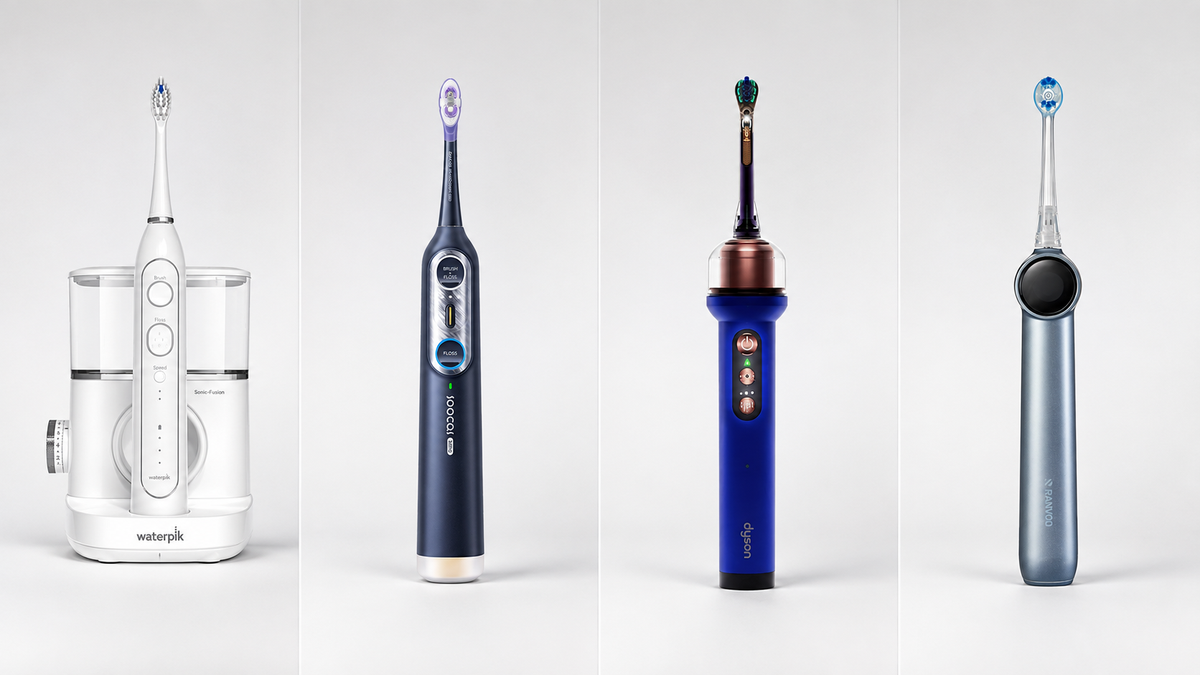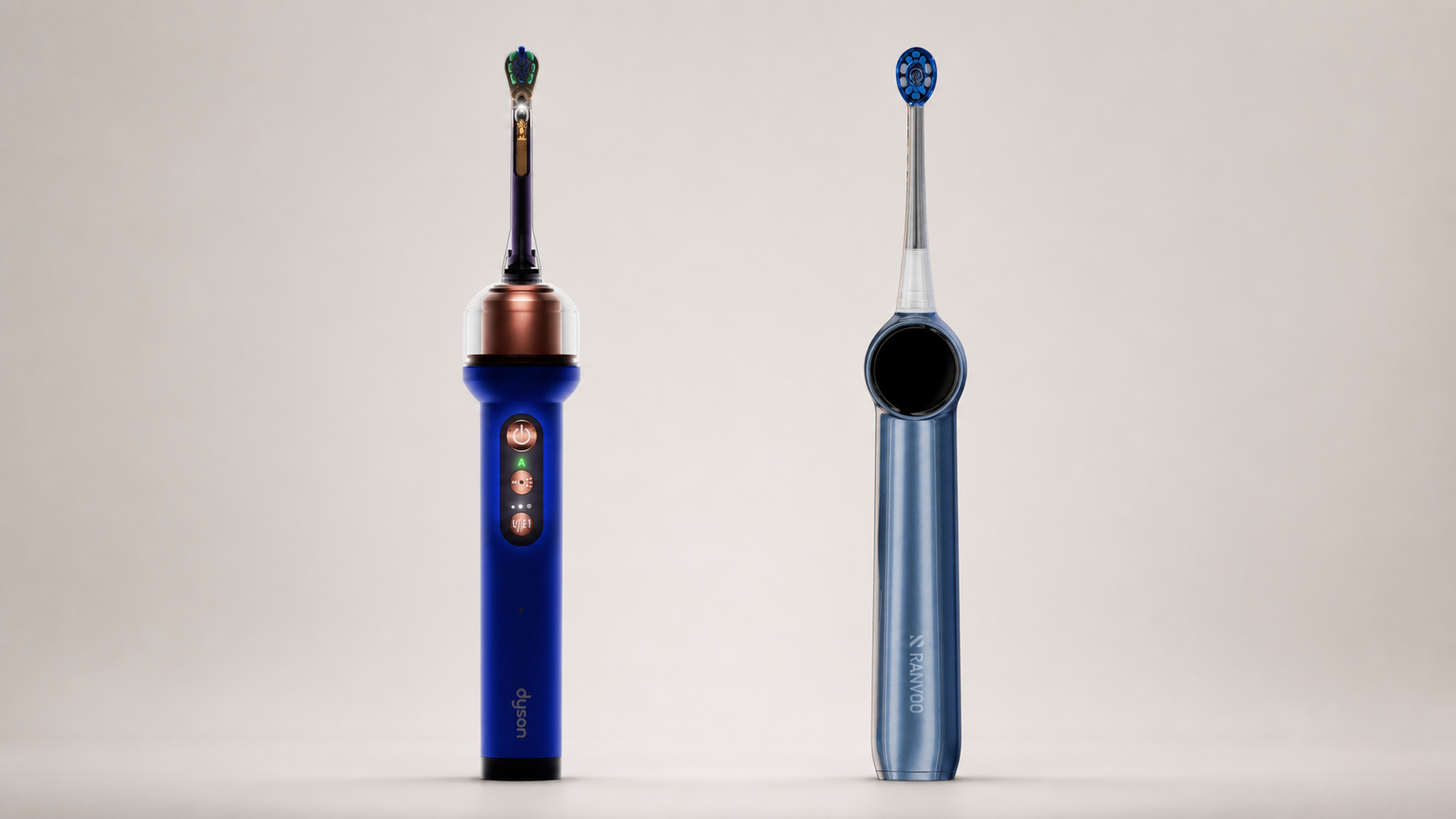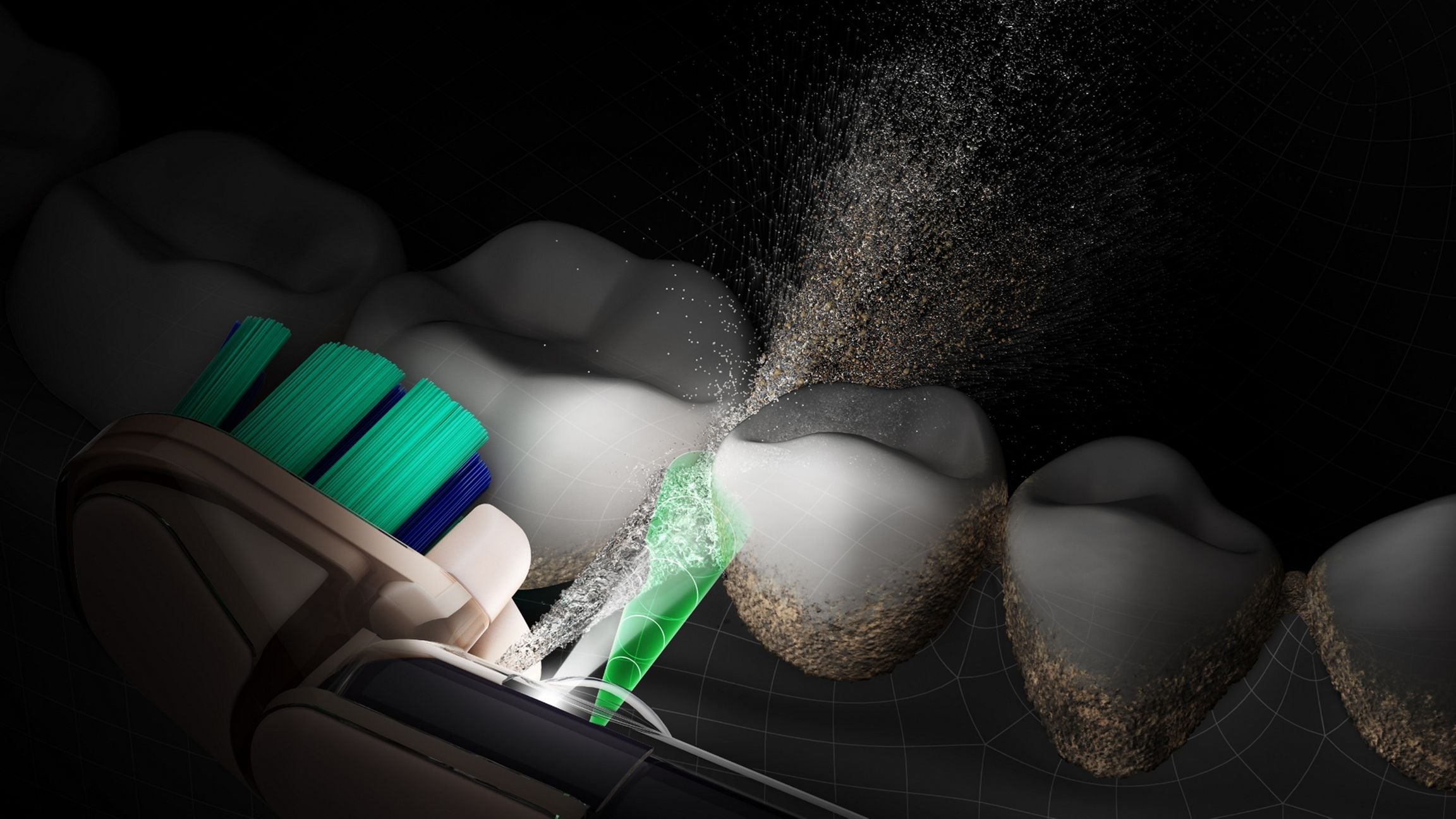
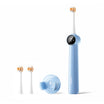




Quick answer: Both clean well, while oscillating-rotating brushes may have a small average advantage for plaque and gum health—but the better choice is the one you find comfortable and use correctly every day.
You do not need to overthink the decision. Look for soft bristles, a two-minute timer, a pressure sensor, and replacement heads you can easily buy.
| If you mainly want... | A practical choice |
|---|---|
| A small head and tooth-by-tooth cleaning | Oscillating-rotating |
| A longer head and a gentle sweeping feel | Sonic |
| The type with a slight research edge on average | Oscillating-rotating |
| The brush you will enjoy using twice a day | Whichever feels better to you |
What Is the Difference?
The main difference is how the brush head moves.
| Feature | Oscillating-Rotating | Sonic |
|---|---|---|
| Movement | A small round head rotates back and forth; some models also pulse | An elongated head vibrates rapidly from side to side |
| How you guide it | Pause briefly on each tooth | Glide slowly along the teeth and gumline |
| Typical feel | Focused and mechanical | Broad and vibrating |
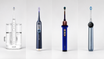
| Common example | Oral-B | Philips Sonicare or RANVOO AirJet X5 |

Which One Removes More Plaque?
Both types are effective, and research suggests that any average advantage for oscillating-rotating brushes is generally small.
A systematic review covering 38 comparisons found a small but statistically significant long-term advantage for oscillating-rotating brushes in plaque control and gum health. The authors described the difference as potentially clinically relevant. View the systematic review
Another systematic review found better interdental plaque removal with oscillating-rotating brushes after eight weeks. View the review
Individual trials sometimes report larger percentage differences. For example, one eight-week trial found greater whole-mouth and interdental plaque reduction with a particular oscillating-rotating model than with a premium sonic model. Read the trial
Those numbers should not be treated as a guarantee for every brush or every user. Studies often compare specific models over relatively short periods, and several cited studies or analyses involved toothbrush manufacturers.
How They Clean
- Oscillating-rotating: The round head makes direct contact and works around one tooth at a time.
- Sonic: Rapid side-to-side movement cleans through bristle contact and moves fluid around the brush head.
Sonic brushes can help move toothpaste and saliva near the gumline, but brushing still depends mainly on bristle contact and good coverage. No electric toothbrush replaces floss or another form of interdental cleaning.
Which One Is Better for Gum Health?
Both types can reduce plaque and gingivitis when used correctly. Some direct comparisons favor oscillating-rotating brushes.
- A 12-week trial reported an 11.7% greater reduction in gingivitis and a 19.8% greater reduction in bleeding sites with one oscillating-rotating brush versus one sonic brush. View the study
- An eight-week trial reported healthy-gum status in 84% of oscillating-rotating users and 53% of sonic users. View the study
- A 2024 meta-analysis also favored oscillating-rotating brushes, although its database and most of its authors were connected to Procter & Gamble. View the meta-analysis
A research advantage for one technology does not matter if the other brush helps you clean more comfortably and consistently.
What About Sensitive Teeth or Receding Gums?
Too much pressure is usually more important than the type of motor. Either design can irritate the gums if you scrub hard or use stiff bristles.
For a gentler routine:
- Choose soft or extra-soft bristles.
- Use a pressure sensor if the brush has one.
- Let the brush move the bristles instead of scrubbing by hand.
- Start with a sensitive mode if full power feels uncomfortable.
- Replace the head when the bristles become bent or worn.
If brushing causes ongoing pain, bleeding, or sensitivity, ask a dentist to check for gum disease, decay, or an incorrect brushing technique.
Which Type Fits Your Needs?
| Your situation | What to consider |
|---|---|
| Sensitive teeth or gums | Either type can work; prioritize soft bristles, a pressure sensor, and a comfortable low-power mode. |
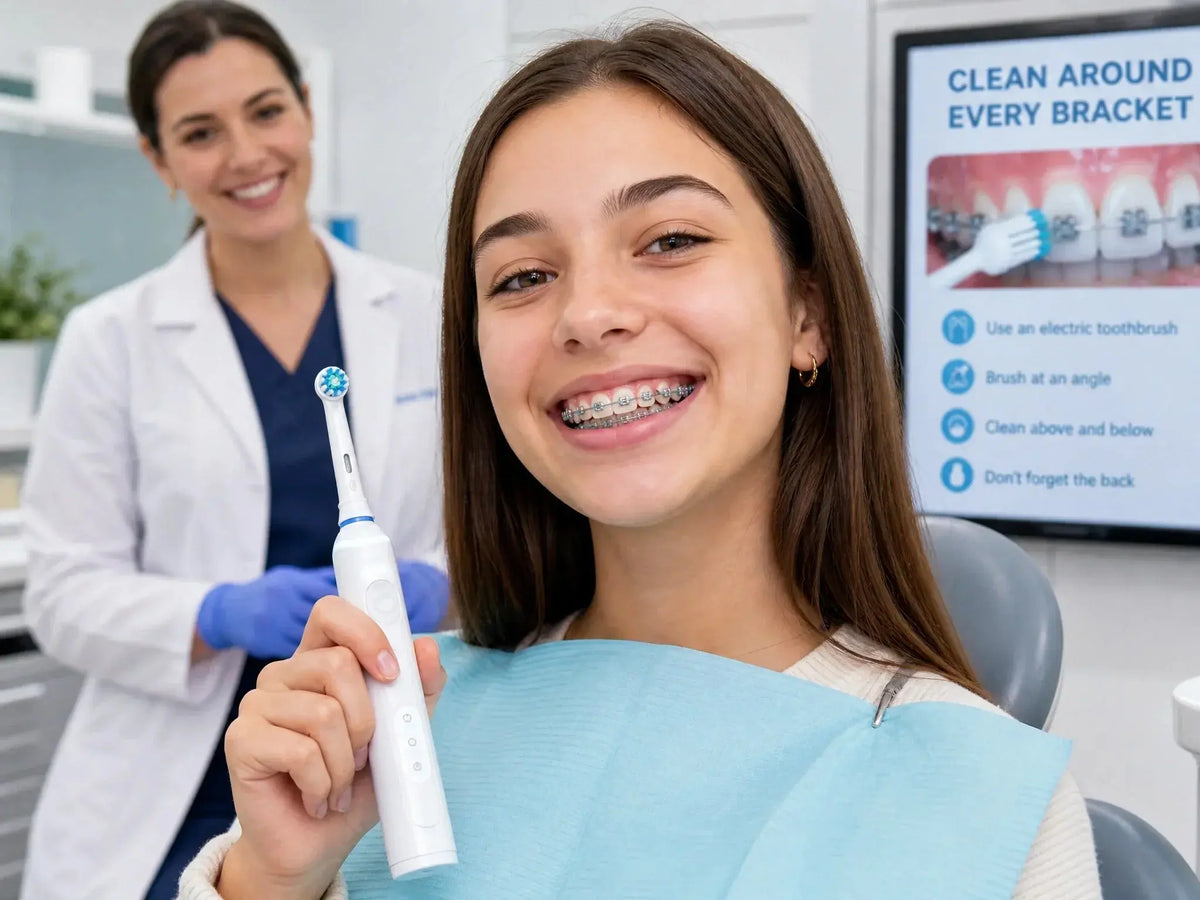
| Braces | Either type can clean around brackets with the right head and technique; an interdental brush or floss is still important. See our guide to toothbrushes for braces. |
| Implants or crowns | Both are generally usable with gentle pressure, but follow the advice of the dentist who placed or maintains your dental work. |
| Heavy plaque buildup | An oscillating-rotating brush may offer a small advantage, but technique and interdental cleaning remain essential. |
| Small mouth or hard-to-reach back teeth | A compact round head may be easier to position. |
| Preference for a sweeping, less focused sensation | A sonic brush may feel more natural. |
Do They Whiten Teeth Differently?
Both can remove some surface stains from coffee, tea, or tobacco. Neither changes the natural color inside the tooth like professional or peroxide-based whitening can.
- A round head may feel more precise on individual stained areas.
- An elongated sonic head covers a wider area with each pass.
- A “whitening” mode may change the brushing pattern, but it does not bleach teeth by itself.
- For stubborn or uneven discoloration, ask a dentist before using abrasive whitening products.
Price and Features Matter Too
The handle price is only part of the cost. Check the price and availability of replacement heads before buying.
| Feature | Why it matters |
|---|---|
| Two-minute timer | Helps you brush for the recommended amount of time |
| 30-second pacer | Encourages even coverage across the mouth |
| Pressure sensor | Warns you when you are pressing too hard |
| Replacement-head cost | Affects the real long-term price of the brush |
| Battery life | Matters most for travel or infrequent charging |
Final Verdict
Choose oscillating-rotating for a small round head and the modest evidence-based edge, or choose sonic if its feel makes you more likely to brush thoroughly every day.
- Choose oscillating-rotating if you like tooth-by-tooth cleaning or want the technology that performs slightly better on average in several reviews.
- Choose sonic if you prefer an elongated head and a smooth sweeping sensation; options include the RANVOO AirJet X5.
Whichever type you choose, brush gently for two minutes twice a day with fluoride toothpaste and clean between your teeth daily. For a technique refresher, see how to use an electric toothbrush.
If you have active gum disease, significant recession, implants, braces, or persistent sensitivity, ask your dentist or hygienist for advice based on your mouth.