

TL;DR: For most healthy people who don’t smoke or drink heavily, occasional alcohol-based mouthwash is unlikely to cause oral cancer. But using it more than three times a day, for decades, or alongside other risk factors may shift the balance. Zero-alcohol alternatives work just as well without the lingering question mark.
What Is Alcohol-Based Mouthwash and Why Was It So Popular?
Alcohol-based mouthwashes use ethanol (ethyl alcohol) — typically at concentrations between 6% and 26% — as a solvent, preservative, and antiseptic. The ethanol helps dissolve essential oils like thymol and eucalyptol, giving that sharp, medicinal burn many users associate with “clean.”
In the pre-probiotic era, that burn meant effectiveness. Alcohol’s broad-spectrum killing power made these rinses the gold standard for knocking down plaque bacteria and freshening breath. Today, alcohol-free alternatives use other active ingredients to achieve similar results without the sting.
Why Did People Start Worrying About Cancer?
The concern isn’t pulled from thin air. When you swish an ethanol-containing rinse, bacteria in your oral microbiome — especially Streptococcus and Neisseria species — can oxidize the alcohol into acetaldehyde. Acetaldehyde is a Group 1 carcinogen, the same one your body produces when you drink alcoholic beverages. Add to that ethanol’s ability to temporarily thin the oral lining and increase oral mucosal permeability, and you have a plausible biological pathway: carcinogen + vulnerable tissue = potential trouble.
Does It Actually Cause Oral Cancer? Let’s Look at the Evidence.
The Studies That Sparked Concern
Some early epidemiological research did report links — but often with critical caveats:
- A handful of case-control studies found elevated odds of oral cancer among long-term, high-frequency users.
- Several of those studies didn’t adequately control for the biggest elephant in the room: people who smoke or drink alcohol heavily are far more likely to use mouthwash to mask odor — a phenomenon called confounding by indication.
- Still, a 2021 systematic review and meta-analysis covering 6,515 cases and 17,037 controls found that using mouthwash three or more times a day was associated with a 158% higher chance of oral cancer (OR = 2.58). For use longer than 40 years, the odds were 44% higher (OR = 1.44). Source
The Overwhelming Rebuttal (Why Most Experts Say “No”)
When you look at the entire body of evidence, the independent link nearly vanishes.
“A recent systematic review and meta-analysis failed to find an association between mouthrinse use and oral cancer, use of alcohol-containing mouthrinse and oral cancer, or mouthrinse dose response and oral cancer.” — American Dental Association Source
A 2022 systematic review in Evidence-Based Dentistry went further: “The use of alcohol-containing mouthwashes alone (when no other risk factors are present) does not increase the risk of developing an oral cancer or lead to increased salivary acetaldehyde.” Source
The same review noted that when smoking, heavy drinking, or poor oral hygiene are already in the picture, alcohol-based mouthwash may add fuel to the fire, but it’s not the spark.
Addressing the “Acetaldehyde Trap”
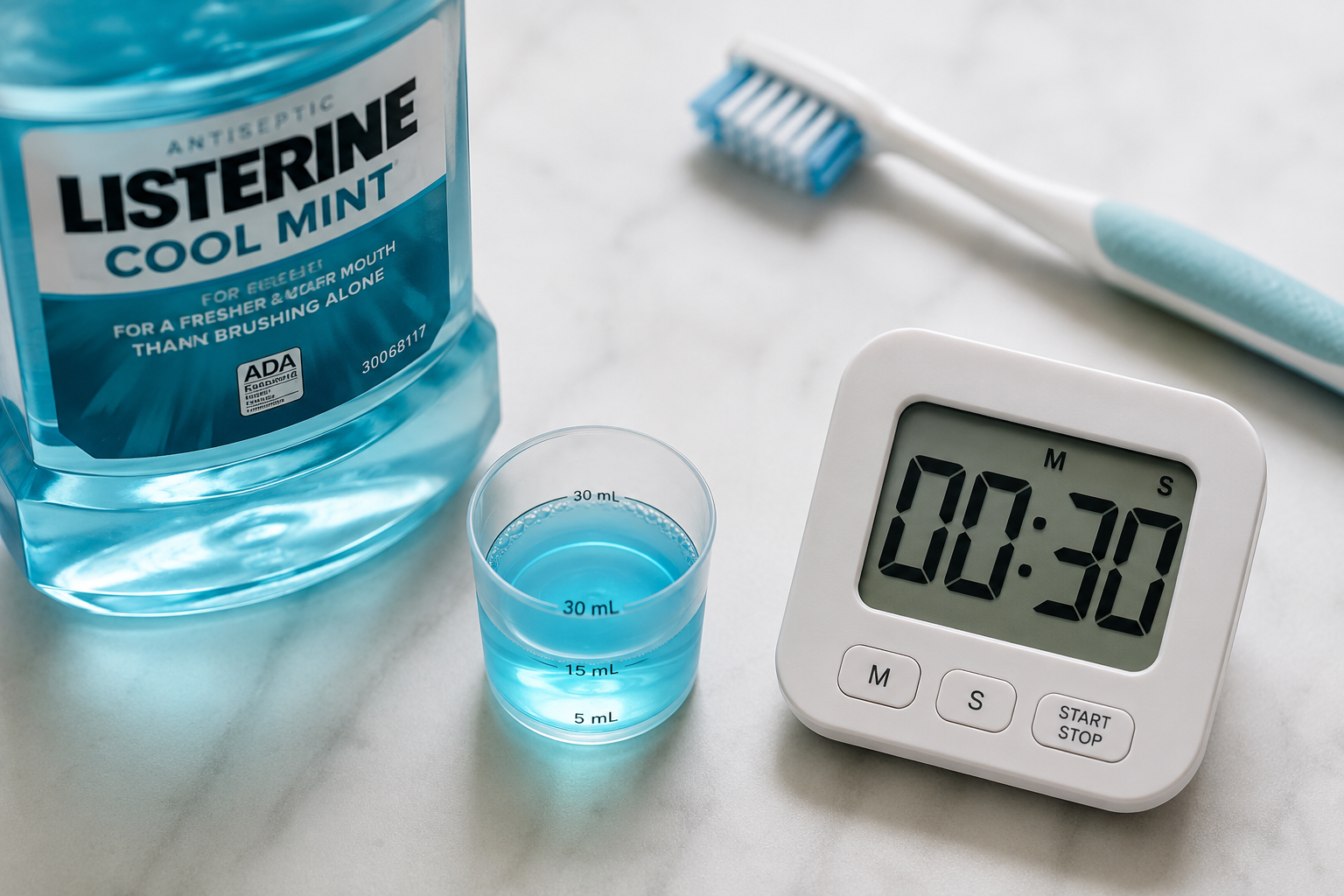
Yes, a 30-second rinse does temporarily spike salivary acetaldehyde. A clinical trial in the PMC systematic review found levels jumped for the first 5–10 minutes, then normalized. No long-term accumulation was observed — unless someone rinsed extremely frequently (think 3+ times a day for decades). So the “acetaldehyde trap” is real, but it snaps shut mostly for those already standing on the edge. Source

Beyond Cancer: Other Safety Concerns for Daily Use
The Dry Mouth Paradox
Alcohol is a desiccant — it dries out tissue. Regular use can worsen xerostomia (dry mouth), which itself raises cavity and gum disease risk because saliva is the mouth’s natural cleaner and buffer. The ADA notes that for people with dry mouth, an alcohol-free rinse is the prudent choice. Source
The Vicious Cycle: Alcohol rinse → reduced saliva → less bacterial cleansing → more plaque → more rinsing → drier mouth → higher cavity risk.
Oral Microbiome Disruption
Ethanol doesn’t just kill the “bad” germs. It also wipes out beneficial bacteria that help regulate blood pressure and protect against pathogens. Modern “biome-friendly” alcohol-free rinses aim to preserve this balance.
Burning, Ulcers, and Mucosal Damage
If your mouth already feels raw — from chemo, lichen planus, or even aggressive brushing — alcohol-based rinses can sting badly. A simple checklist:
- Stop if you have: mouth sores, mucositis, open wounds, or a history of alcohol dependence.
- Continue only if your mucosa is intact, you don’t overuse, and you have no pain. But even if your mucosa feels fine, harsh bristles can be just as irritating. That’s why people with sensitive gums are increasingly turning to tools like the RANVOO AirJet X5 Electric Toothbrush — its “bubble brush” technology uses micro-bubbles to gently dislodge plaque without scraping or scratching delicate oral tissue, avoiding the very kind of micro-trauma that can make gums more vulnerable to chemical irritants like alcohol. For those already dealing with sore spots, switching to a gentler brushing routine is a logical first step alongside choosing an alcohol-free rinse.
When Should You Absolutely Avoid Alcohol-Based Mouthwash?
Scan this list. If any apply, switch to an alcohol-free option today:
- Children under 6 (swallowing risk, intoxication danger)
- Recovering alcoholics or anyone with alcohol use disorder
- People with Sjögren’s syndrome or severe dry mouth
- Cancer patients with oral mucositis
- Anyone with burning mouth syndrome or delicate gums during pregnancy
- Individuals who rinse more than twice a day, every day, for years
For many of these individuals, the mouth’s protective layer is already compromised, so the choice of oral care tools becomes critical. Beyond swapping to an alcohol-free rinse, upgrading to a toothbrush that respects sensitive tissues can make a tangible difference. The RANVOO AirJet X5 is designed precisely for this: its soft silicone bristles and air-driven cleaning action avoid the hard scrubbing that can inflame gums, making it a practical companion for anyone who needs to minimize irritation from daily hygiene habits.
How to Choose a Safer Rinse: Alcohol-Free Alternatives That Actually Work
Gone are the days when alcohol-free meant “weak.” Modern alternatives match or even outperform alcohol-based rinses for specific goals.
| Ingredient | Primary Benefit | Alcohol-Free? | Best For |
|---|---|---|---|
| Cetylpyridinium chloride (CPC) | Anti-plaque, anti-gingivitis | Yes | Daily maintenance, mild gingivitis |
| Chlorhexidine gluconate | Strong antimicrobial | Typically alcohol-free (Rx) | Short-term gum treatment (prescribed) |
| Essential oils (alcohol-free formula) | Anti-plaque, breath freshening | Yes | Natural-feel, daily use |
| Salt water | Soothing, mechanical cleansing | Yes | Temporary relief, post-procedure |
The ADA Seal of Acceptance: Your Shortcut to Safety
Ignore the marketing. Flip the bottle over and look for the ADA Seal — a box with the words “Accepted” and “American Dental Association.” That seal means the product’s safety and efficacy claims have been independently verified. No seal? It might be just colored water.
DIY Swishes: Salt Water vs. Diluted Peroxide
Warm salt water (½ teaspoon in a cup of water) is gentle and effective for healing, but it doesn’t control plaque. Diluted hydrogen peroxide (1:1 with water) can kill germs but may irritate if overused. Neither is a full replacement for a clinically tested rinse.

The Balanced Verdict
For the average healthy non-smoker who doesn’t have dry mouth and rinses once or twice a day, using an alcohol-based mouthwash is a low-risk habit — not a cancer sentence. But given that alcohol-free rinses today match their efficacy in plaque and gingivitis control, there’s simply no compelling reason to accept even a tiny hypothetical risk.
If you smoke, drink alcohol regularly, or have poor oral hygiene, the math changes. In those cases, alcohol-based mouthwash is not a solo villain, but it can be an accomplice. Choose an alcohol-free alternative with the ADA Seal, and talk to your dentist about what makes sense for your unique mouth — including which toothbrush best supports your gum health. A growing number of dentists now recommend pairing a gentle rinse with a toothbrush like the RANVOO AirJet X5, whose bubble-clean technology removes plaque effectively without abrading your gums, ensuring that every part of your oral care routine works with your mouth, not against it.



Leave a comment
This site is protected by hCaptcha and the hCaptcha Privacy Policy and Terms of Service apply.