The five most common cosmetic dentistry procedures are teeth whitening, dental veneers, dental bonding, clear aligners, and gum contouring. Each one focuses on a different part of your smile: color, shape, gaps, alignment, or gum line. The right choice depends on your main concern, your dental health, your budget, and how much treatment you feel comfortable with. Start with a dental exam so hidden problems like decay or gum disease are checked first.
The main thing to know: cosmetic dentistry improves how your smile looks, but the best procedure matches your specific concern, and a healthy mouth comes first.
The Five Procedures at a Glance
This quick comparison can help you see the options side by side.
| Procedure | What it helps | How invasive | Typical time | Cost note |
|---|---|---|---|---|
| Teeth whitening | Lifts stains and brightens natural teeth | Low to moderate | Same day or a few weeks | Usually the least expensive |
| Dental veneers | Changes color, shape, size, or small gaps on front teeth | Moderate; may involve removing a thin layer of enamel | Two or more visits | Higher cost |
| Dental bonding | Repairs small chips, cracks, gaps, and discoloration | Low; often little or no tooth removal | Often one visit | Usually budget-friendly |
| Clear aligners | Straightens teeth and improves mild-to-moderate bite issues | Low, but requires consistent daily wear | Several months or longer | Moderate to higher cost |
| Gum contouring | Reshapes uneven or excess gum tissue | Moderate | One visit with a short healing period | Moderate cost |
Crowns and dental implants are often considered cosmetic-restorative rather than purely cosmetic because they rebuild or replace tooth structure, not just improve appearance.
1. Teeth Whitening
Teeth whitening, also called teeth bleaching, brightens natural teeth by lifting stains. It is usually one of the simplest and most affordable cosmetic options.
There are two main approaches:
- In-office whitening: Your dentist applies a stronger whitening gel in the dental chair, sometimes with a light or laser.
- Take-home whitening: Your dentist makes custom trays and gives you a lower-concentration gel to wear at home.
A review comparing whitening methods found no significant difference in color change between in-office and at-home bleaching, and tooth sensitivity can happen with either approach, according to research on professional tooth whitening. Some newer evidence suggests at-home trays may cause less intense sensitivity than in-office treatment, but the quality of that evidence is considered low, according to an updated systematic review.
Whitening works best on surface stains from coffee, tea, tobacco, or normal aging. These are called extrinsic stains, meaning stains on the outside of the tooth. It is less helpful for intrinsic stains, or deep/internal stains, such as severe gray discoloration or stains caused by certain medications early in life.
Whitening does not change the color of crowns, veneers, or tooth-colored fillings. If you have these restorations, talk with your dentist about whether whitening makes sense for you.
Tooth sensitivity during or after whitening is common. It usually fades, but ask your dentist about desensitizing products if it bothers you. Whitening results are not permanent. Many people see color last about 1 to 2.5 years before touch-ups are needed, according to a review on home bleaching prognosis.
2. Dental Veneers
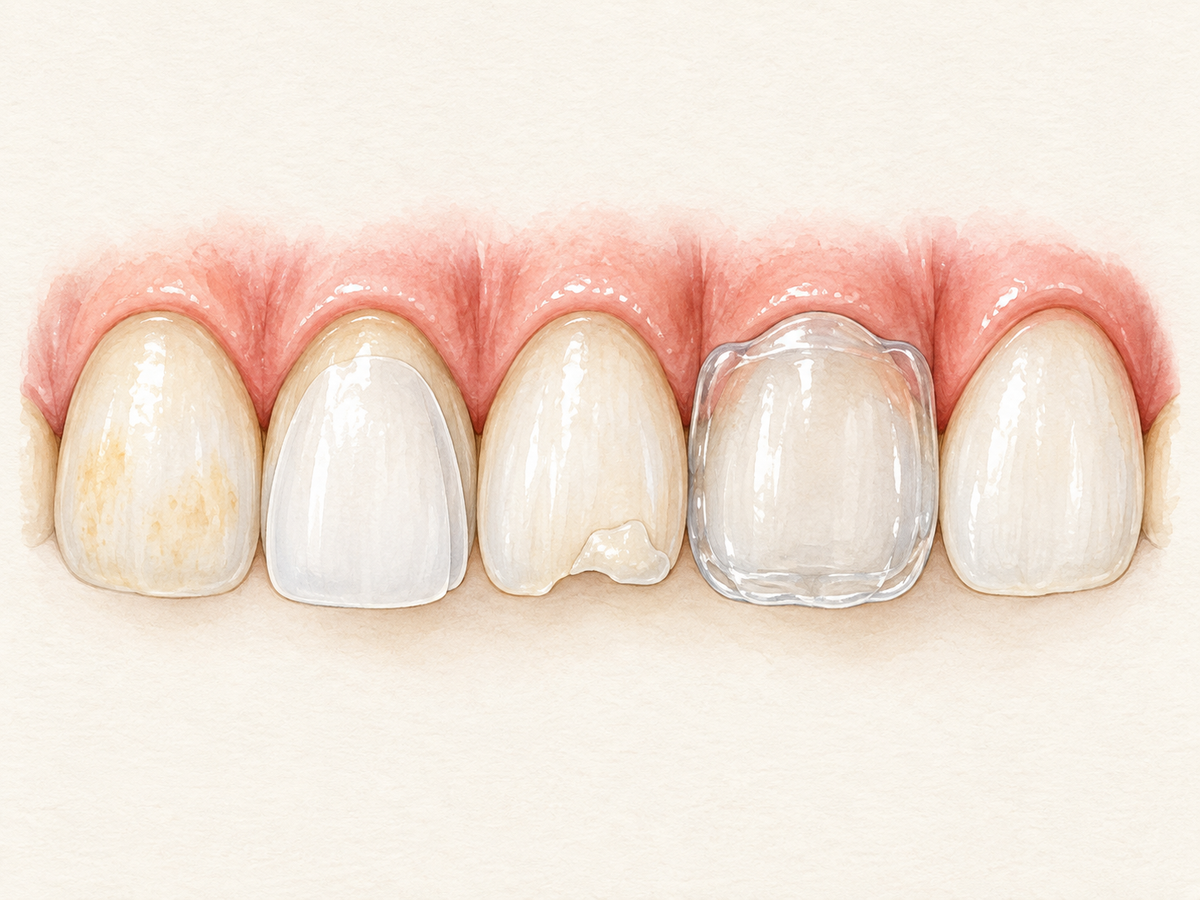
Dental veneers are thin, custom-made shells that cover the front surface of your teeth. They can change the color, shape, size, or even close small gaps. Most people use them on the visible front teeth.
Veneers can create a dramatic “smile makeover” because one treatment can address several appearance concerns at once. Ceramic veneers in particular are known for strong cosmetic results and good durability. A systematic review on dental veneers reported high aesthetic outcomes and favorable long-term survival when cases are chosen carefully.
The trade-off is that veneers are usually permanent. To make room for the shell, the dentist often removes a very thin layer of enamel, the hard outer layer of the tooth. Because enamel does not grow back, veneers are considered an irreversible treatment.
They also cost more than options like whitening or bonding. Studies show veneers can survive well, often above 90% at 10 years when they are bonded mostly to enamel, according to a review of veneer survival and failure. But fractures, debonding, or color changes can happen over time, and veneers may eventually need repair or replacement.
Veneers are not the best first choice for everyone. People who grind or clench heavily, or who have untreated gum disease, may need to address those issues before considering veneers.
3. Dental Bonding
Dental bonding uses a tooth-colored material called composite resin to repair small chips, cracks, gaps, or discolored spots. The dentist shapes the resin directly onto the tooth and hardens it with a special light.
Bonding is popular because it is fast and conservative. Many bonding repairs can be done in a single visit. In many cases, little or no tooth enamel is removed, so the procedure is less invasive than veneers. It is also often reversible or easier to repair later.
The trade-off is durability. Composite resin can stain or wear over time, and it may not last as long as ceramic veneers. A review comparing composite and ceramic materials notes that composite resins have limitations related to surface wear, roughness, and staining. Bonding can also chip if you bite into hard foods or use your teeth as tools.
Bonding works well for small, targeted fixes. If you have several teeth that need major color or shape changes, veneers may be a better long-term match.
4. Clear Aligners
Clear aligners are removable, nearly invisible plastic trays that gradually move teeth into better alignment. Many people think of them as an alternative to metal braces because they are less noticeable and can be removed for eating and brushing.
Clear aligners can improve crooked teeth, small gaps, and some bite issues that affect how your smile looks. Research suggests clear aligner therapy works well for mild to moderate alignment problems and may be more comfortable than fixed braces, according to an overview of systematic reviews.
The main limitation is discipline. Aligners usually need to be worn about 20 to 22 hours a day. If you do not wear them consistently, results can stall or fall short. Some studies also found that aligners may not match braces for more complex tooth movements or severe bite problems, according to a systematic review on treatment outcomes.
After treatment, most people need a retainer to keep teeth from shifting back. Ask your dentist or orthodontist whether clear aligners can handle your specific case before starting.
5. Gum Contouring
Gum contouring, also called gum reshaping, changes the gum line to make the smile look more balanced. It is often used for a gummy smile, where too much gum tissue covers the teeth.
The dentist numbs the area with local anesthesia, then removes or reshapes a small amount of gum tissue. Two main techniques are used:
- Laser gum reshaping: Uses a dental laser to remove tissue.
- Scalpel gum reshaping: Uses a small surgical blade.
Some evidence shows diode laser treatment may cause less postoperative pain and bleeding than traditional scalpel surgery, according to a systematic review on gingivectomy methods. Recovery is usually short, and most people can return to normal eating within a few days to a week.
Gum contouring only changes the gum line. It does not whiten teeth, fix chips, or straighten teeth. If your smile concern is mostly about too much gum showing, this may be the right procedure.
How to Choose the Right Procedure
Start with your main smile complaint. Ask yourself what bothers you most: color, chips, gaps, crooked teeth, or your gum line.
Then think about:
- Budget and timeline: How much can you spend, and how quickly do you want results?
- Invasiveness: Are you comfortable with enamel removal, gum reshaping, or months of aligner wear?
- Maintenance: Are you willing to keep up with touch-ups, retainers, or repairs?
A cosmetic dentist can help you match your goals to a realistic plan. Ask to see before-and-after photos or a visual mockup of your expected result. This can prevent surprises later.
Before any cosmetic work, your dentist should check for decay, gum disease, or other hidden oral health problems. Clinical guidance on aesthetic treatment planning emphasizes careful assessment before elective procedures, as noted in this review of factors to consider. Gum disease in particular should be treated before moving on to cosmetic phases.
It is also common to combine procedures. For example, you might whiten first, then use aligners, and finish with bonding on a chipped edge.
Common Pitfalls to Avoid
- Choosing solely on price: The cheapest option is not always the best long-term fit.
- Skipping a full dental exam: Cosmetic work should not hide untreated decay or gum disease.
- Expecting one procedure to fix every flaw: Whitening will not straighten teeth, and bonding will not reshape your gums.
- Ignoring maintenance: Veneers and bonding can stain or chip and may need repair or replacement over time.
- Rushing into an irreversible makeover: Get a second opinion before committing to major permanent changes.
If you grind your teeth, have active gum disease, or have unrealistic expectations, your dentist may recommend treating those concerns first. Careful case selection improves the odds of a good outcome, according to guidance on porcelain veneers.
Bottom Line
Teeth whitening, veneers, bonding, clear aligners, and gum contouring each solve a different cosmetic problem. The best choice depends on your goals, your dental health, and how much treatment you are comfortable with.
Your next step is simple: book a cosmetic dentistry consultation, show the dentist what bothers you about your smile, and ask which procedures actually fit your case.
This article has been reviewed by an oral health professional for accuracy. It is intended to provide general educational information and should not be used as a substitute for personalized medical advice, diagnosis, or treatment. If you have questions or concerns about your oral health, please consult a dentist, physician, or other qualified healthcare provider.