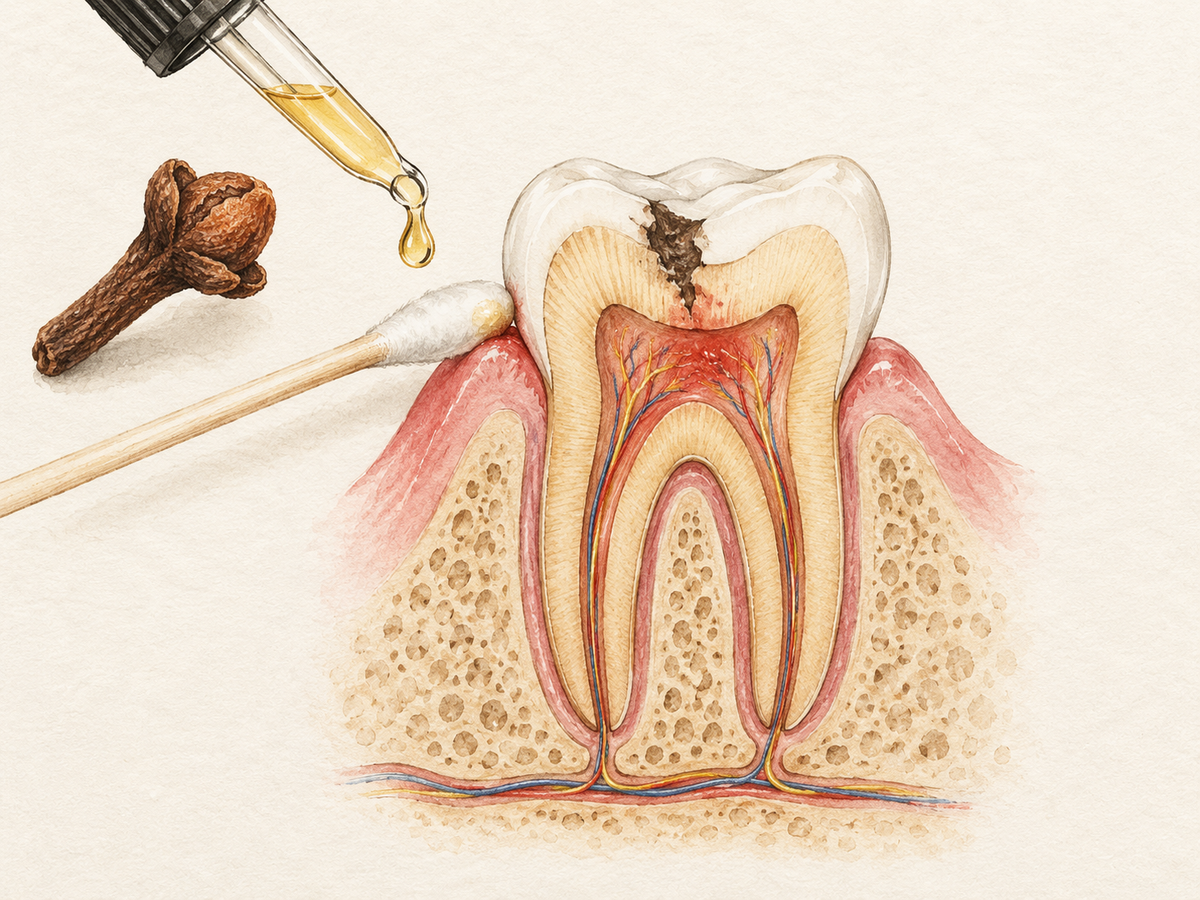
Clove oil can briefly dull a toothache, but it is not a cure. Its active compound, eugenol, has a numbing effect and some germ-killing action. That makes clove oil a short-term comfort measure only. If your pain lasts more than a day or two, you need a dentist.
Use clove oil only when diluted. Never swallow it, never pour it on gums full strength, and stop at the first sign of burning or irritation.
Why Clove Oil Works
Clove oil comes from cloves. The main ingredient behind its effect is eugenol, which can help quiet the pain-sensing nerve endings in a sore tooth. Eugenol also has anti-inflammatory and antibacterial properties, according to a review of its health effects.
In plain terms, it works a little like a weak, short-acting numbing agent applied to the sore spot. A systematic review of plant-based pain relievers found that eugenol had clinically useful pain-relieving effects for some dental pain.
But this numbing action only hides the pain. It does not remove decay, drain infection, or repair a cracked tooth. The real problem can continue to get worse while you feel temporary relief.
How to Use It Safely
If you use clove oil while waiting to see a dentist, follow a careful method:
- Wash your hands and use a clean cotton swab.
- Mix 1–2 drops of clove oil into about a teaspoon of a carrier oil, such as olive oil or coconut oil.
- Dab a small amount of the diluted mixture onto the painful tooth or nearby gum.
- Use only a tiny amount, and keep it away from the back of your mouth and throat.
Do not pour undiluted clove oil directly onto your gums. Do not pack a soaked cotton ball against your cheek and leave it there. Do not swallow the oil.
High concentrations of clove oil can damage tissue, and full-strength oil is not safe for direct use. According to a safety review on cloves, high concentrations are toxic and can cause direct tissue damage.
Swallowing clove oil is especially dangerous for children. A published case report described a 2-year-old who developed coma, seizures, and acute liver damage after swallowing 5–10 mL of clove oil. Store the bottle out of reach, and never use more than a drop or two.
Dilution, Dose, and Timing
Clove oil is strong. The goal is the smallest amount that gives temporary relief.
For adults, start with 1–2 drops mixed into a carrier oil. Use it no more than 2–3 times a day, and do not use it for more than a few days in a row. Follow the product label if you use a commercial clove oil product.
More is not better. Stronger or more frequent use raises the chance of gum irritation and accidental poisoning. A review of clove-based dental formulations notes that eugenol’s irritation is dose-related, meaning higher concentrations are more likely to bother the gums and nearby tissue.
Stop using the oil and call a dentist if the pain does not improve or gets worse.
Side Effects and Who Should Avoid It
Some people get local reactions even with careful use. Stop using clove oil if you notice:
- Burning or stinging
- Redness or swelling
- Mouth sores or ulcers
- Itching, rash, or any sign of allergy
Dental products containing eugenol have been linked to irritation, allergic contact dermatitis, and, rarely, severe allergic reactions, according to a review on eugenol.
Clove oil is not a good choice for everyone. Avoid it or ask a doctor first in these situations:
- Infants and young children: Swallowing even a small amount can be life-threatening.
- Pregnancy or breastfeeding: Safety data are lacking, so ask a doctor before use.
- Liver disease: High doses can harm the liver.
- Bleeding disorders or blood thinners: Eugenol may slow blood clotting and interact with those medicines, according to safety guidance on cloves.
Get urgent medical help if you develop throat swelling, trouble breathing, or feel faint after using clove oil. These can be signs of a serious allergic reaction.
What Clove Oil Won’t Fix
Clove oil cannot treat the reason the tooth hurts. It will not cure:
- A cavity from tooth decay
- An abscess, which is a pus-filled tooth infection
- A cracked tooth
- A gum infection
- An impacted wisdom tooth
An abscess is a good example. It is not just pain. It is an infection that needs drainage and removal of the source. According to guidance on dental infections, antibiotics alone do not replace drainage and source removal for an abscess.
Using clove oil may make the pain feel lighter for a while, but the infection or damage can continue to spread. A persistent toothache needs a dentist to find and treat the cause.
Red Flags: When to See a Dentist
See a dentist promptly if a toothache comes with any of these warning signs:
- Swelling in the face or jaw
- Fever
- Pus or a foul taste in the mouth
- Pain that lasts more than 1–2 days
- A broken or knocked-out tooth
These signs can point to infection, nerve damage, or a dental emergency. Same-day dental care is the safer path.
Call emergency services or go to an emergency department if you have trouble breathing, trouble swallowing, drooling, a spreading facial swelling, or a high fever with a dental infection. Clinical guidance on dental infections lists these as signs that may require urgent care.
Common Mistakes to Avoid
Avoid these common errors:
- Using full-strength clove oil on the gums
- Applying it to open sores or broken tissue in the mouth
- Swallowing it or using it near the throat
- Relying on it for days instead of seeing a dentist
- Expecting it to replace antibiotics, drainage, a root canal, or a professional cleaning
Stop at the first sign of burning, redness, or soreness. Dilute the oil every time, even if you have used it before.
Clove oil can take the edge off a mild toothache for a short time when used correctly. But the real solution is finding out why the tooth hurts. If the pain lingers, swelling appears, or you feel unwell, make a dental appointment. For red flags like facial swelling or trouble breathing, seek urgent care.
This article has been reviewed by an oral health professional for accuracy. It is intended to provide general educational information and should not be used as a substitute for personalized medical advice, diagnosis, or treatment. If you have questions or concerns about your oral health, please consult a dentist, physician, or other qualified healthcare provider.