An oral mucocele is a harmless, fluid-filled bump that forms when a tiny saliva gland tube gets blocked or damaged, usually on the inside of the lower lip or under the tongue. It is not a cold sore and not mouth cancer. Many small mucoceles clear up on their own. Home care can keep the area comfortable while you wait. If one lasts more than a few weeks or keeps coming back, a dentist or oral surgeon can remove it safely.
The main thing to know: A mucocele is usually nothing to fear. Watch it for a few weeks, keep the area clean, and do not pop it. See a dentist if it does not shrink, grows, hurts, or returns.
Quick Answer: What Is an Oral Mucocele?
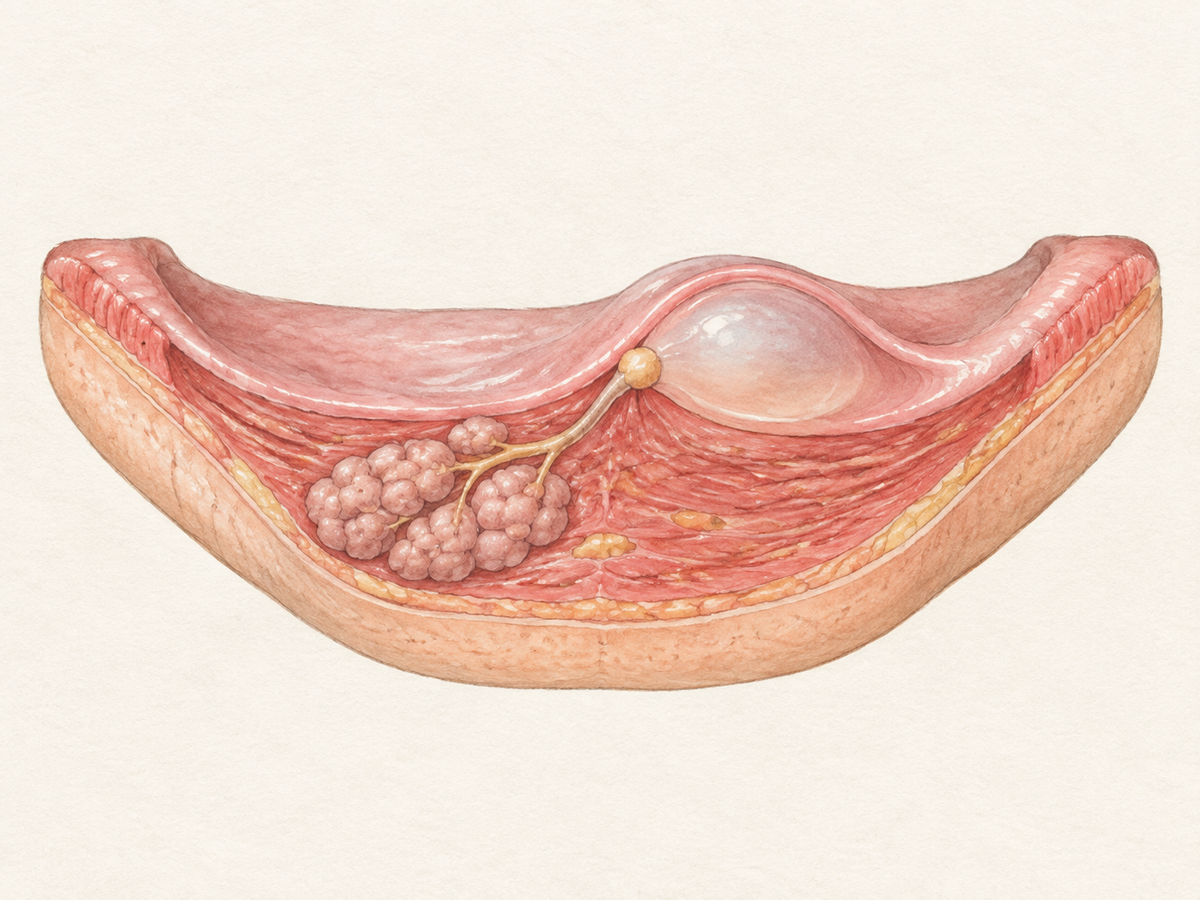
Your lips, cheeks, and the floor of your mouth contain many tiny salivary glands. These glands make saliva. That saliva normally travels through a narrow tube, called a duct, into your mouth.
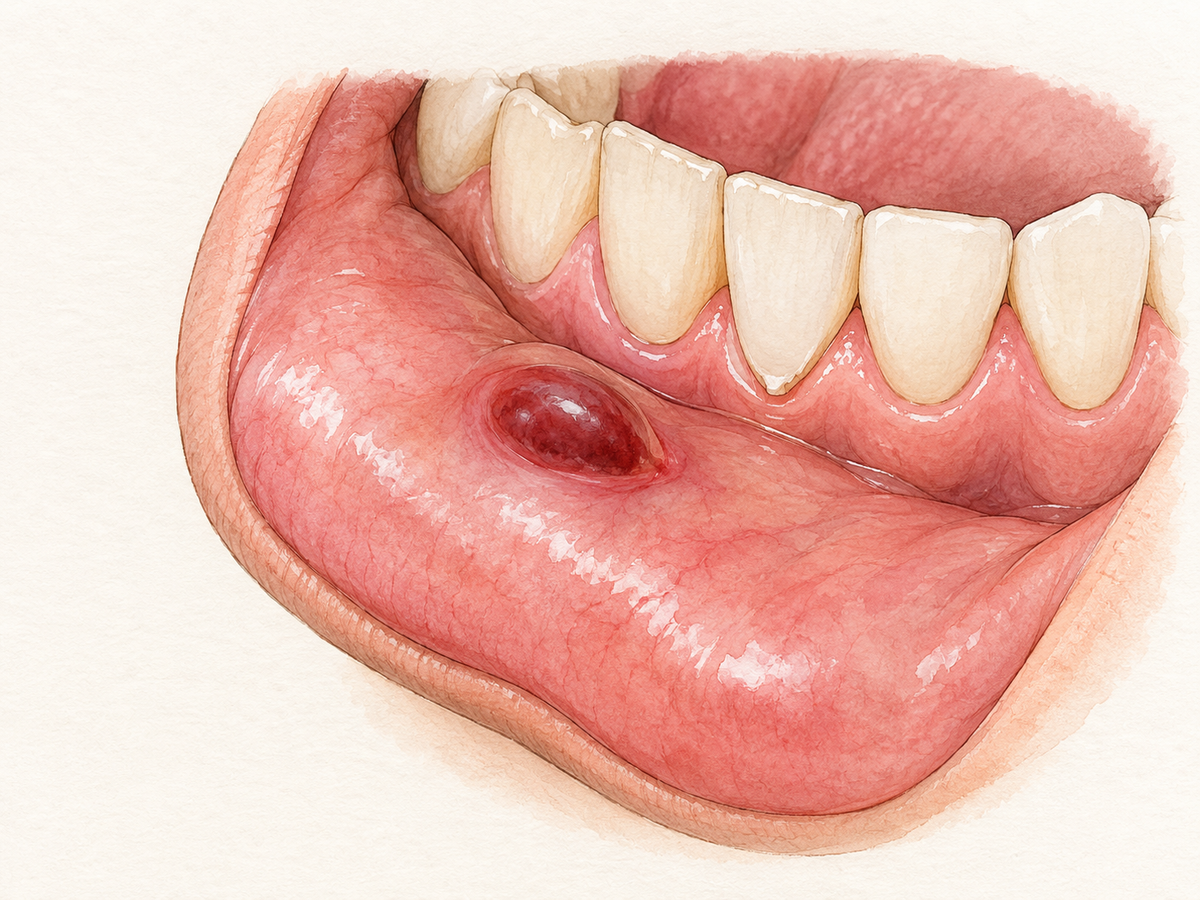
A mucocele happens when one of those tubes is injured or blocked. Saliva collects in the nearby tissue instead of flowing into the mouth, creating a soft, dome-shaped bump. It can look clear, bluish, or the same color as the rest of your mouth.
The lower lip is the most common spot. In one long-term study of 173 cases, 78% were on the lower lip. A mucocele on the floor of the mouth is called a ranula, and it may be larger than one on the lip. According to clinical reports on oral mucoceles, these bumps are benign, meaning they are not cancer.
A mucocele is not the same as a cold sore. A cold sore usually affects the outer lip, may tingle or crust, and often forms blisters. A mucocele is simply saliva trapped under the surface.
Why It Happens
Most mucoceles start with a minor mouth injury. Common triggers include:
- Biting the lower lip, even lightly.
- Sucking or chewing on the lip or inside of the cheek.
- A bump or fall that hits the mouth.
- Repeated rubbing from teeth, braces, or a retainer.
The injury pinches or tears the tiny saliva duct. Saliva leaks out and collects. Kids, teens, and people who chew their lips are more likely to get one. Mucoceles are the most common non-cancerous minor salivary gland problem in children and young adults, likely because those groups experience more small mouth injuries and habits like lip biting. This review explains that trauma and lip-biting habits are frequently involved.
The lower lip is especially vulnerable because it sits right in the path of the teeth. So if you have a mucocele, it does not mean something is seriously wrong.
Will It Go Away by Itself?
Often, yes. Many small mucoceles drain or break on their own and then disappear. However, if the damaged saliva gland keeps leaking, the bump may refill and come back.
Watchful waiting simply means giving the area time while watching for changes. Some bumps clear within a few weeks. Others take longer. One small study followed 30 people with lower-lip mucoceles who chose to wait. With no treatment, 24 out of 30 saw the bump go away on its own, with an average time of about 3.6 months. The study concluded that lower-lip mucoceles have a strong potential to heal without intervention. This was a small study, so it is not a promise that everyone will have the same experience. You can read more about the self-healing approach.
A reasonable approach is:
- Try gentle home care for about two to three weeks.
- If the bump is shrinking or disappears, continue to keep an eye on it.
- If it stays the same, grows, or comes back after bursting, see a dentist.
What to Do at Home
Simple home care can help keep the area comfortable and clean:
- Rinse with warm salt water two or three times a day. Use about half a teaspoon of salt in 8 ounces of warm water.
- Brush and floss normally, but be gentle around the bump.
- Avoid spicy, salty, sour, or rough foods that can sting or scrape the area.
- Try not to poke it with your tongue, teeth, or fingers.
Do not pop, squeeze, cut, or drain a mucocele yourself. Squeezing can push saliva deeper into the tissue and may introduce bacteria, raising the chance of infection. It can also make the bump return larger than before.
Important: Popping it at home is the main mistake to avoid. Let it drain naturally, or have a professional handle it.
When to See a Dentist or Doctor
Most mucoceles are harmless, but some need a professional look. See a dentist or doctor if the bump:
- Lasts longer than two to three weeks without shrinking.
- Grows quickly.
- Becomes painful, firm, or tender.
- Bleeds or drains pus.
- Interferes with chewing, speaking, or swallowing.
- Keeps coming back after it drains.
- Appears on the floor of the mouth and is getting larger.
Also, any mouth bump you are unsure about deserves a check. A dentist can usually tell a mucocele from other conditions by looking at it and asking about your history. If the bump is removed, the tissue is often sent to a lab to confirm the diagnosis and rule out anything more serious. A large clinicopathological study reinforces that even common-looking mucoceles should have removed tissue examined under a microscope.
If a floor-of-mouth swelling is suddenly making it hard to breathe or swallow, seek urgent medical care right away.
Professional Treatment Options
If a mucocele needs treatment, there are several options. The choice depends on the size, location, whether it has come back, and whether your dentist wants a tissue sample to confirm the diagnosis.
| Treatment | What it is | When it may be a good fit |
|---|---|---|
| Surgical removal | The dentist or oral surgeon numbs the area and removes the bump, usually with the nearby damaged saliva gland. | Persistent or recurring mucoceles. |
| Laser treatment | A focused beam of light removes or vaporizes the bump. | People who want less bleeding or fewer stitches. |
| Cryotherapy | The bump is frozen with liquid nitrogen. | Children or people who want to avoid cutting. |
| Medication injection | A corticosteroid or sclerosing medicine is injected to shrink the bump. | Some small, accessible mucoceles. |
| Marsupialization | The dentist creates a small opening so saliva can drain. | Larger bumps or floor-of-the-mouth lesions. |
Surgical removal is the most common approach for a mucocele that keeps coming back. Removing the associated gland gives the best chance to stop the leak for good. It is usually a quick office procedure under local anesthesia, meaning the area is numbed but you stay awake.
Laser treatment and cryotherapy can be less invasive. A review comparing treatment methods found no clear difference in recurrence between surgical removal, CO2 laser, and marsupialization, so your dentist can choose based on your situation and experience. For some children, cryotherapy has been used safely and effectively, because it can be done without local anesthesia in some cases.
Medication injections may be an option when surgery is less desirable. Some dentists inject a corticosteroid or a sclerosing agent to shrink the lesion. A clinical review of modern treatment techniques describes these injection-based approaches as less invasive alternatives for selected mucoceles.
No treatment can absolutely guarantee the bump will never return, but removing the involved saliva gland is considered the definitive fix for recurring mucoceles.
How to Prevent Another One
Prevention is mostly about reducing repeated injury to your saliva ducts. You can:
- Notice when you bite or suck your lip, and try to stop. This is the biggest step.
- Keep dry or cracked lips moisturized with a lip balm. Dry lips are easier to bite.
- Be mindful of chewing the inside of your cheek.
- If braces, a retainer, or a denture rubs the same spot, tell your dentist or orthodontist. They may adjust it or suggest wax.
- Ask for help if lip or cheek biting feels like a nervous habit you cannot break. Stress management or habit-reversal strategies can reduce it.
These steps lower the odds, but they cannot guarantee another mucocele will never form. An accidental bite can still happen.
Bottom Line
A mucocele is a harmless saliva-filled bump, usually caused by a minor injury to a tiny saliva duct. Many small ones go away on their own, and gentle care is enough. Do not pop or cut it. If the bump lasts more than two to three weeks, grows, hurts, bleeds, interferes with eating or speaking, or keeps coming back, see a dentist or doctor. Professional treatment is safe, usually quick, and can remove the problem when necessary.
This article has been reviewed by an oral health professional for accuracy. It is intended to provide general educational information and should not be used as a substitute for personalized medical advice, diagnosis, or treatment. If you have questions or concerns about your oral health, please consult a dentist, physician, or other qualified healthcare provider.