TL;DR: Teething does not cause a true fever. While your baby might feel slightly warmer—staying well below 100.4°F (38°C)—any higher temperature is a sign of illness, not teeth. You’re not wrong to worry; this myth is incredibly common. Let’s sort fact from fear so you know exactly when to comfort and when to call the doctor.

The Short Answer: No, Teething Does Not Cause a True Fever
Your baby is fussy, drooling rivers, and feels a little warm. You lift their lip and spot a hint of white. The first thought that flashes through every tired parent’s mind: Is it teething, or is something wrong?
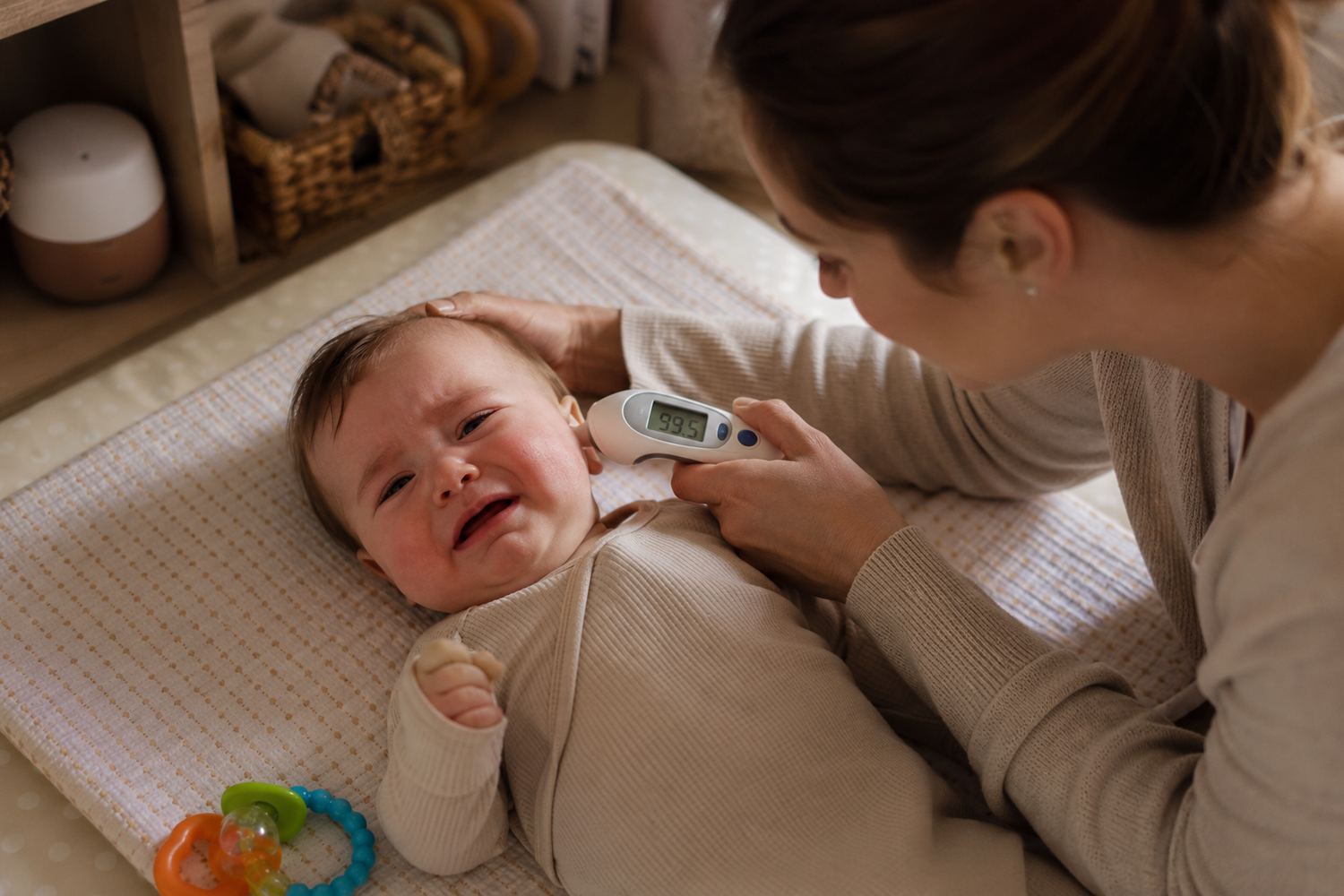
Here’s the evidence-based truth: teething itself does not cause a clinically significant fever. While a very slight rise in body temperature can happen as a tooth cuts through, it won’t cross the medical fever threshold of 100.4°F (38°C). If your thermometer reads 100.4°F or higher, your baby is fighting an infection—and teething is just an innocent bystander.
This isn’t just a modern pediatric opinion. A systematic review and meta-analysis examining the connection between tooth eruption and fever found no overall association in the majority of studies. Even when studies that used rectal temperatures showed a link, the temperature elevations remained low-grade and short-lived. So you can immediately release that guilt: the fever isn’t your baby’s teeth punishing them.
What Teething Actually Feels Like (and What’s Normal)
To understand why fever gets blamed, it helps to picture the world from your baby’s gums. A tooth doesn’t magically pop through; it gradually presses against bone and tissue, causing gingival inflammation, local redness, and swelling. The area becomes tender, itchy, and deeply annoying—not unlike how your own mouth feels after dental work.

The most common, science-backed normal teething symptoms include:
- Excessive drooling (which can lead to a harmless perioral drool rash)
- Chewing, mouthing, or biting everything within reach
- Mild irritability and crabbiness, especially in the evenings
- Slightly decreased appetite for solids (gum pressure makes eating uncomfortable)
- Brief sleep disruptions, though they’re not severe or prolonged
Global research estimates that around 80% of infants experience some teething-related symptoms, most commonly increased biting and irritability. But here’s the critical point: none of these symptoms are systemic. Teething disrupts the mouth, not the whole body. A baby who is drooly and mouthing everything but still interactive, drinking well, and not alarmingly hot is likely just cutting a tooth.
Why the Fever Myth Won’t Go Away

If the evidence is clear, why do so many parents—and even some healthcare providers—still link teething to fever? The answer lies partly in biology and partly in human nature.
When a tooth pushes through the gum, the local inflammation releases cytokines like interleukin-1 beta and tumor necrosis factor-alpha. These same chemical messengers can raise body temperature slightly by resetting the brain’s thermostat, but the effect is tiny—barely a degree, often peaking around 99°F to 100°F and never hitting a true fever. This is best described as a low-grade temperature elevation, not a fever.
More powerfully, the myth sticks because parents desperately need a why. Your baby is miserable, and teething is a concrete, visible event. It feels reassuring to point to those puffy gums and say, “Ah, that’s why she’s hot.” But that well-intentioned misattribution can be risky. A landmark prospective study found that no single symptom—including fever—could reliably predict when a tooth was about to erupt, and no symptom appeared in more than 35% of infants during the teething period. In other words, blaming teeth can mask an ear infection, a urinary tract infection, or another illness that needs attention.
Teething vs. Illness: A Quick Symptom Checklist
When it’s 3 a.m. and your baby is crying, you need a clear mental cheat sheet. Use this to quickly sort teething symptoms from red flags that warrant medical attention.
Normal (or Expected) Teething Signs: - Gum swelling, redness, or visible tooth tips - Increased drool, a mild facial rash from moisture - Chewing fingers, toys, or anything nearby - Mild fussiness that responds to cuddling or cold objects - Temperature slightly elevated but under 100.4°F
Red Flags — Probably NOT Teething: - High fever (100.4°F / 38°C or above) - Diarrhea or vomiting — a little looser stool from excess drool is possible, but true diarrhea signals an enteric virus - Widespread rash beyond a drool-line irritation - Ear tugging with relentless crying — could be referred gum pain, but an ear infection is at least as likely - Lethargy or extreme sleepiness (harder to wake than usual) - Refusing to drink or showing signs of dehydration
“There is no credible evidence linking teething to high fever or gastrointestinal disturbances.”
That statement comes from a structured review of teething literature, and it’s worth tattooing on your tired brain. If your baby has a fever plus any of the red-flag symptoms above, it’s time to look beyond the gums.
Safe, Effective Ways to Soothe Teething Pain

Comfort is possible—and you don’t need to cross safety lines to provide it. Stick to these pediatrician-approved methods:
- Chilled (never frozen) teething rings. The coolness numbs without damaging delicate gum tissue. A solid, BPA-free teether placed in the fridge (not freezer) works beautifully.
- Gentle gum massage. Wash your hands and use a clean finger or a damp, cool washcloth to rub the swollen areas. Counter-pressure can be surprisingly soothing.
- Pain relief medication when needed. For babies over 6 months, acetaminophen or ibuprofen (at the correct, weight-based dose) can help during particularly rough nights. Never give aspirin to a child, and always confirm dosing with your pediatrician.
Steer clear of these unsafe options: - Topical numbing gels with benzocaine. The FDA warns they can cause a rare but life-threatening condition called methemoglobinemia, where blood can’t carry oxygen. Not worth the risk. - Amber teething necklaces. They pose a serious choking and strangulation hazard. There’s also zero evidence that succinic acid released from warmed amber affects pain. - Homeopathic teething tablets. Some have been found to contain inconsistent levels of belladonna, a toxic substance. The FDA has issued multiple warnings.
Once that first tooth breaks through, oral care starts immediately. Even before teeth appear, wipe gums with a damp cloth after feedings. For yourself, using an electric toothbrush reinforces how thorough, consistent cleaning looks—a habit your child will mimic. As more teeth arrive, consider future-proofing: once your child turns 3 and has a full smile, transitioning to a kids’ sonic electric toothbrush can make brushing those tricky back molars both effective and fun.
When to See the Pediatrician

Let’s consolidate the decision-making into a few clear thresholds that leave no room for guilt:
Call your doctor if your baby has: - Any fever at or above 100.4°F (38°C) if under 3 months; for older infants, a fever that persists or is accompanied by other symptoms - Crying that cannot be soothed for hours, or a high-pitched, weak cry - Refusal to drink for several feeding sessions, or significantly fewer wet diapers - Signs of dehydration: dry mouth, sunken soft spot on the head, no tears when crying
Healthcare professionals stress that teething should be a diagnosis of exclusion—meaning you only assume it’s the teeth after ruling out other causes. This isn’t meant to scare you; it’s meant to empower you. One eye-opening review found that among 50 children admitted to a hospital with “teething” as the reported complaint, 48 had a different medical condition, including one case of bacterial meningitis. That’s an extreme example, but it illustrates why peeking under the hood—checking ears, throat, and hydration—matters every single time.
Teething is a normal, if messy, milestone. It will come and go in waves across the first two years, peaking around 12–15 months when molars muscle in. Trust your gut. If your baby seems sicker than just bummed about their gums, they probably are. You’re the expert on your child, and now you have the data to back up that instinct.
This article has been reviewed by an oral health professional for accuracy. It is intended to provide general educational information and should not be used as a substitute for personalized medical advice, diagnosis, or treatment. If you have questions or concerns about your oral health, please consult a dentist, physician, or other qualified healthcare provider.