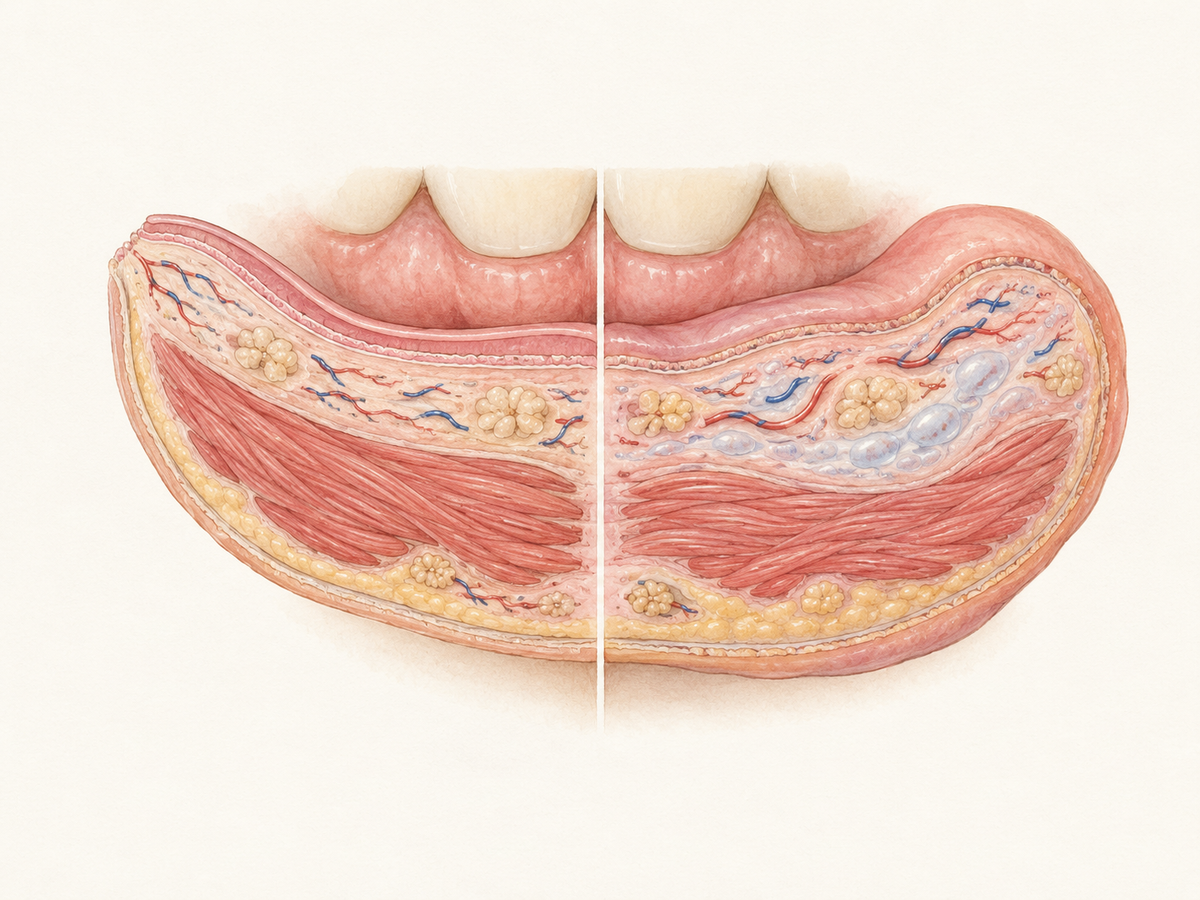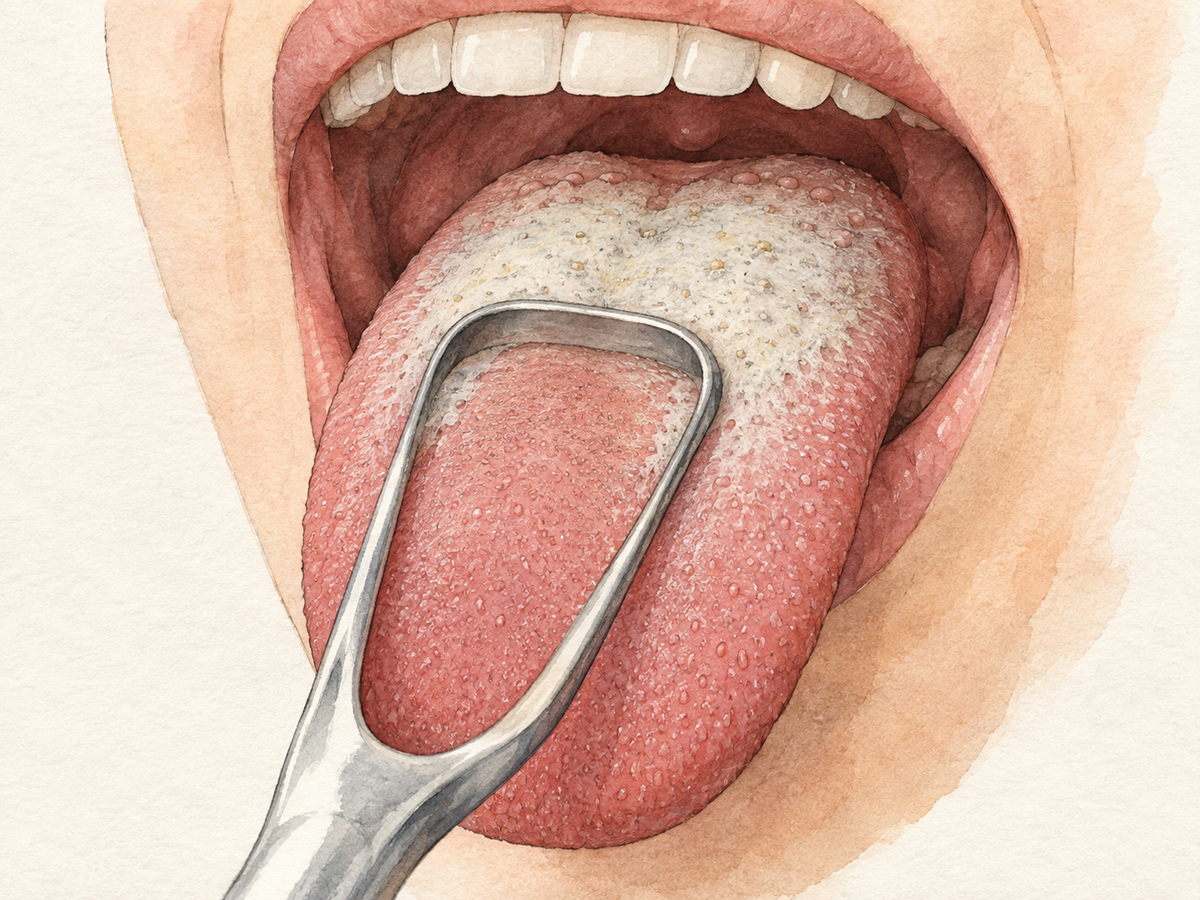











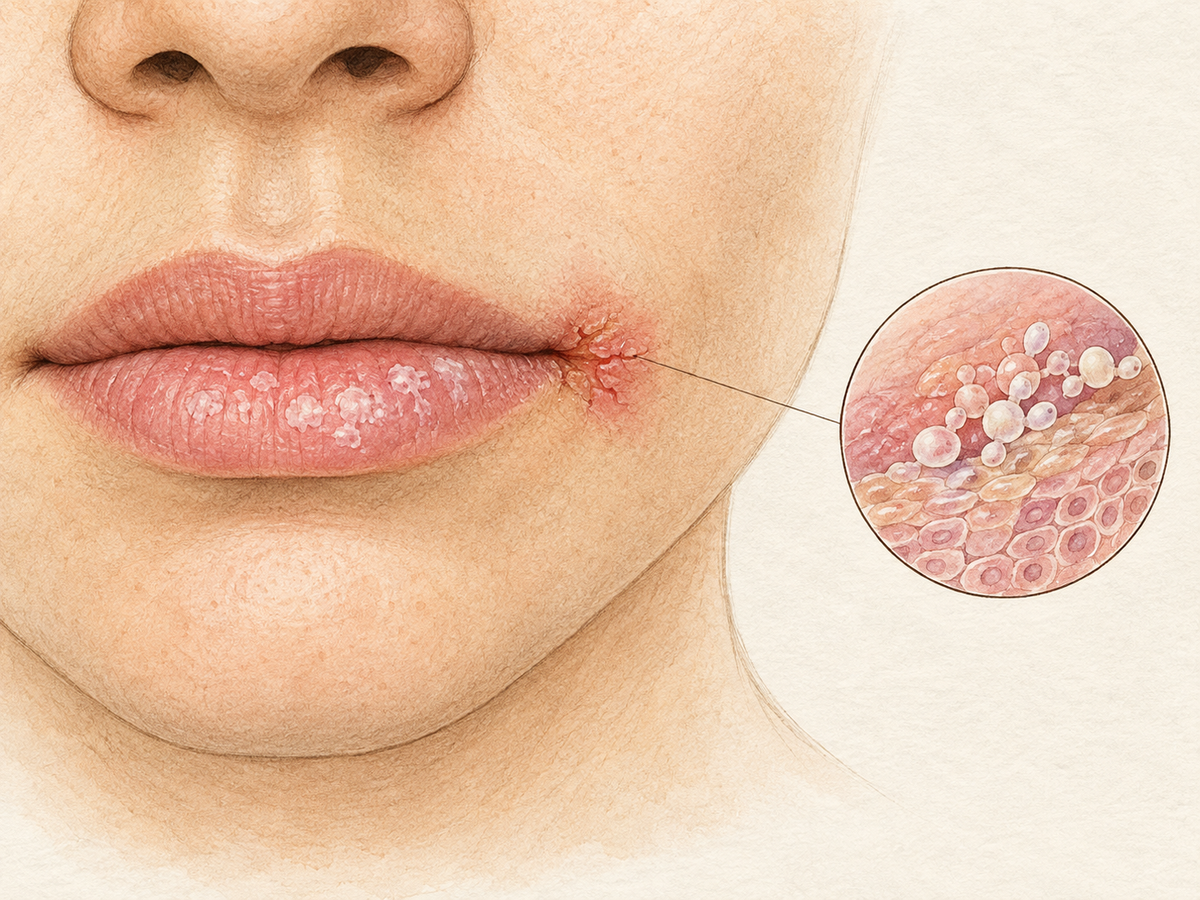
“Lip fungus” usually means an overgrowth of Candida, a yeast that normally lives on the skin and inside the mouth. It can cause white or creamy patches, redness, soreness, burning, and cracked corners that may ooze or crust. Most cases respond to antifungal treatment used as directed plus keeping the area dry, but symptoms that last more than one to two weeks, are severe, or keep coming back need a medical check.
Safety rule: Do not treat lip or mouth-corner fungus with a steroid-only cream unless a provider prescribes it. Steroids can weaken the skin’s local defenses and let yeast grow more.
Symptoms: What to Look For
Lip fungus can involve the lips, the skin around them, or the corners of the mouth. Common signs include:
- White or creamy patches on the lips or inside the mouth. These may wipe off and leave a red area.
- Redness or a shiny, raw look.
- Burning, stinging, soreness, or tenderness.
- Cracked mouth corners that split, ooze, or crust. This is called angular cheilitis.
- An unpleasant or sour taste, and sometimes trouble swallowing.
A mild case may look like ordinary chapped lips, which means dry, cracked lips. The difference is the pattern. Simple dryness usually improves with a plain balm and less lip licking. Fungal irritation tends to linger, feel worse after moisture, or come with a sour taste or swallowing trouble.
Clinical guidance notes that oral yeast infections can present with soreness, an unpleasant taste, and a burning feeling, while angular cheilitis appears as red, cracked corners at one or both sides of the mouth, according to a review of oral candidosis and guidance on oral candidiasis.
Causes: Why It Starts
Candida is a normal resident of the mouth and skin. It only causes problems when conditions let it overgrow. That can happen because of:
- Moisture trapped at the mouth corners from saliva.
- Lip licking or cracked, irritated lips that break the skin barrier.
- Dentures, retainers, or other oral appliances that hold moisture against the skin.
- Inhaled asthma medicines, especially steroid inhalers.
- Antibiotics, which can disturb the normal balance of germs in the mouth.
- Diabetes, high blood sugar, or a weakened immune system.
Denture wear and inhaled steroids are well-known triggers, according to clinical guidance on oral candidiasis. Antibiotics, diabetes, and immune changes can also shift the normal balance toward yeast overgrowth, as reviewed in this overview of oral Candida infection. These are not signs of poor hygiene. They are clues about what to adjust.
Is It Fungus or Something Else?
Lip symptoms overlap, so a quick comparison can help you describe what you see. This is not for self-diagnosis.
| Condition | Typical clues |
|---|---|
| Lip fungus / yeast | White, creamy patches; redness; soreness; often sits in moist corners; may cause a sour taste |
| Cold sore (fever blister) | Small blisters, often one-sided; burning or tingling before crusting; often triggered by sun, stress, or illness |
| Eczema or contact cheilitis (lip irritation or allergic reaction) | Itchy, flaky, or spreading rash; may follow a new lip balm, cosmetic, or irritant |
| Angular cheilitis | Cracked, red corners; can be fungal, bacterial, or irritant; may ooze or crust |
| Simple dryness | Improves with plain balm; no white patches or oozing |
A simple decision rule: if it blisters, burns before crusting, or follows sun or stress, it may not be fungal. If it is white, moist, and persists in skin folds, yeast is more likely. But angular cheilitis can involve both yeast and bacteria, so how it looks alone is not always enough to tell the cause, according to a review of oral candidosis. If symptoms are severe, recurring, or unclear, get a medical confirmation before using a cream that may not match the cause. Using the wrong cream can make things worse.
Treatment: What Works
Treatment is usually straightforward, especially when the trigger is addressed.
- Topical antifungals. Creams, ointments, or liquids with clotrimazole, miconazole, or nystatin are common first choices. They work by making direct contact with the affected skin. Clotrimazole and miconazole also have some activity against certain bacteria, which can be useful for cracked corners, as noted in a review of oral candidosis.
- Oral antifungals. A provider may prescribe a pill if the infection is moderate to severe, widespread, or not responding to topical treatment.
- Treating a bacterial co-infection. Cracked corners may involve bacteria such as Staphylococcus aureus along with yeast, so treatment sometimes needs to cover both.
Finish the full course. It is tempting to stop when the spots fade, but yeast can still be present. Stopping too early is a common reason the infection returns. Some guidance recommends continuing antifungal treatment beyond the point when symptoms clear to reduce relapse, according to a review of oral candidosis. Follow the exact plan from the product label or your provider.
Do not use a steroid-only cream such as hydrocortisone alone unless a provider specifically prescribes it. Topical steroids can lower the skin’s local immune response and allow yeast to grow more. Clinical guidance specifically advises against topical corticosteroids for angular cheilitis, according to a clinical review of oral candidiasis.
What Not to Do (and Home Care That Helps)
A few habits can make lip fungus worse. Try to avoid:
- Licking your lips or picking at patches.
- Sharing lip balm, lipstick, or anything else that touches the mouth.
- Overusing flavored or scented lip products, which can irritate healing skin.
- Applying hydrocortisone or another steroid cream without an antifungal.
Home care that helps:
- Blot the corners of your mouth dry after eating or drinking.
- Apply a plain barrier ointment, such as a petrolatum-based lip balm, to protect the skin.
- Clean dentures, retainers, or mouthguards every day and follow your dentist’s soaking plan.
- If you use a steroid inhaler, rinse your mouth with water after each use and spit it out.
- Use gentle saltwater rinses only for mild soothing. They are not a substitute for antifungal medicine when the infection has taken hold.
Denture wearers benefit from removing appliances at night and cleaning them well, and rinsing after an inhaled steroid can reduce the chance of thrush, according to this review of oral Candida infection. These steps are supportive; an established infection still needs antifungal treatment.
When to See a Doctor
See a dentist, doctor, or dermatologist if you notice:
- Spreading redness, swelling, or warmth.
- Pus, fluid, or a fever.
- Painful swallowing or trouble eating.
- Symptoms that last more than one to two weeks.
- Repeated flare-ups despite using antifungal treatment.
A clinician can examine the area and may take a swab if the diagnosis is unclear or the infection is not responding to treatment, according to a review of oral candidosis. They may also recommend a blood sugar check if diabetes could be part of the picture, because oral yeast overgrowth can be a sign of underlying conditions. A prescription antifungal may be needed.
Seek help early if you have diabetes, an immune condition, or wear dentures. In people with weakened immunity, oral yeast can spread, so medical review is safer than repeated home guessing, according to a review of oral Candida infection.
Prevention: Stopping Recurrence
Prevention is about keeping the lips dry and the skin barrier intact.
- Do not lick your lips.
- Gently dry the mouth corners after eating.
- Replace old lip balms, lipsticks, and lip glosses, especially after an infection.
- Clean and disinfect dentures, retainers, or mouthguards daily.
- If you have diabetes, work with your care team to manage blood sugar.
A trigger plan can help. For a few weeks, note when flare-ups happen: winter weather, inhaler use, antibiotics, stress, or a new product. Once you see a pattern, adjust early. For example, use a plain protective balm before cold weather or rinse your mouth after each inhaler dose.
Prevention works through consistency, not perfection. If you are doing the basics and still getting repeated flare-ups, ask for a medical review. A hidden trigger is often easier to fix than repeated guesswork.
This article has been reviewed by an oral health professional for accuracy. It is intended to provide general educational information and should not be used as a substitute for personalized medical advice, diagnosis, or treatment. If you have questions or concerns about your oral health, please consult a dentist, physician, or other qualified healthcare provider.