








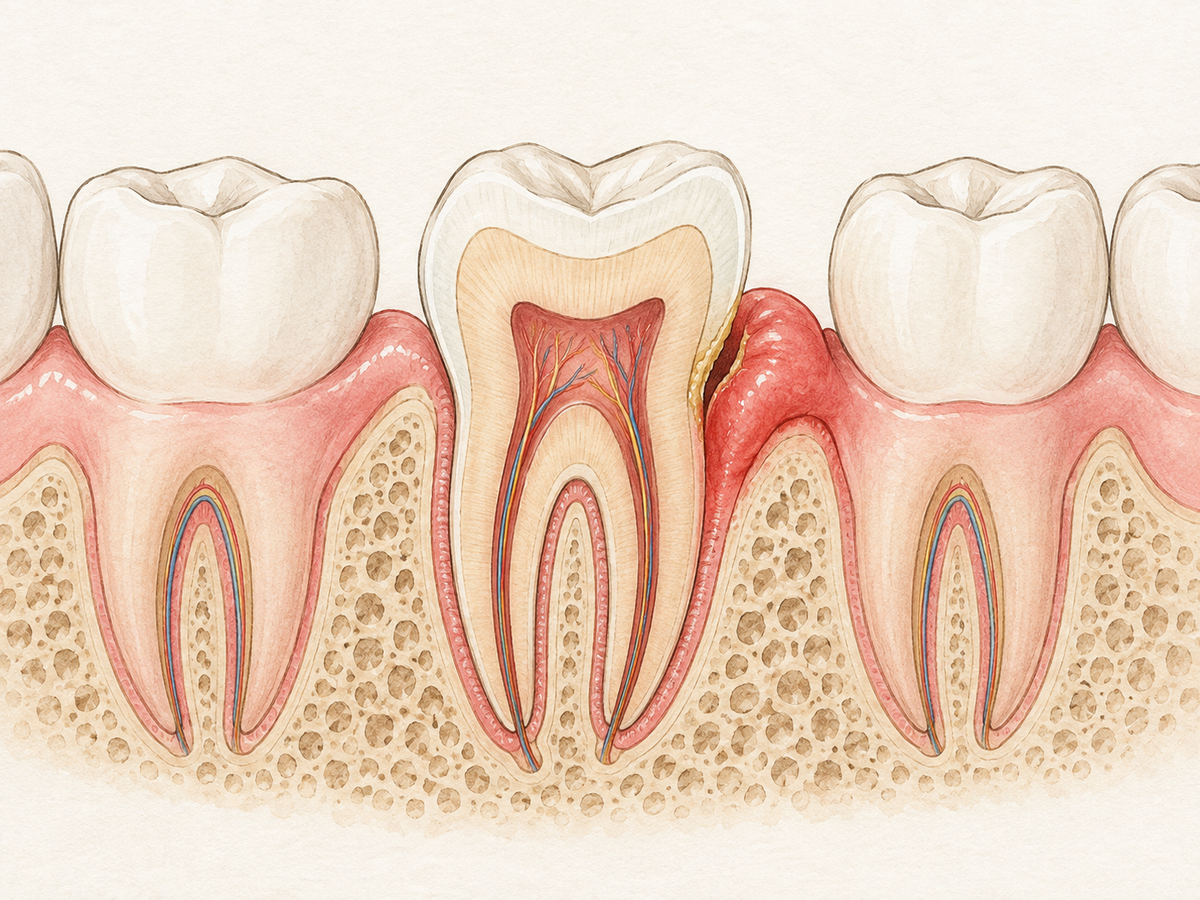
A swollen gum around one tooth usually means something is irritating or infecting that one spot—trapped food, plaque, a gum or tooth-root abscess, or an injury—rather than a whole-mouth gum disease flare. This pattern helps narrow down the cause, so treatment can be more focused. Still, if the swelling spreads or you also have fever or trouble swallowing, get urgent care.
Why One Tooth Only?
Gum disease that affects the whole mouth often makes many areas puffy and bleed. When the swelling shows up around one tooth, it is usually a local irritant—something bothering one spot—or a localized dental infection in that tooth area.
Common local irritants include food wedged between teeth, plaque buildup along one gumline, or a small injury. The practical benefit is that your dentist can usually target that one problem area instead of treating the whole mouth.
The 6 Causes to Check First
Here are the most common causes of swelling around one tooth:
Plaque buildup along the gumline. This is gum irritation from plaque that was missed around one tooth. The key clue is a red, puffy area that bleeds when you floss, but no big lump.
Gum abscess (periodontal abscess). This is a pocket of pus in the gum support around a tooth. It can cause a tender, swollen bump, sometimes with a bad taste or light pus. A gum abscess is a localized infection that can worsen quickly, so it needs prompt dental care.
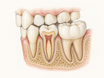
Tooth-root abscess (periapical abscess). This infection starts inside the tooth or at the root tip, often from deep decay, a crack, or an old deep filling. The key clue is pain when chewing or biting, along with swelling near the tooth.
Food stuck between teeth or under the gum. Food can be forced into the space during chewing and irritate one spot. The clue is pain near one tooth after eating, which may improve after gentle flossing or rinsing. Food impaction can irritate surrounding gum tissue and lead to gum problems.
Injury or irritation to one spot. A rough chip, popcorn husk, toothpick slip, or recent dental work can make one area sore and swollen. The clue is that you can usually connect it to something that happened.
Gum inflammation around a wisdom tooth (pericoronitis). A partially erupted wisdom tooth can trap food and bacteria under a flap of gum. The clue is swelling at the very back of your mouth, sometimes with stiffness when opening.
In short, gum-origin problems are usually plaque, a gum abscess, or pericoronitis. Tooth-origin problems often come from the root. Trapped food or a small injury is a debris or irritation cause.
Symptoms That Point to the Cause
Symptoms can overlap, so these clues are not a do-it-yourself diagnosis. But they can help you decide how soon to act.
Pain when chewing or biting often points toward a problem inside or around the tooth root. With a gum abscess, pain may also get worse when you bite down.
Pus or a bad taste can mean an abscess is draining. A periodontal abscess may cause pus and an unpleasant taste.
Bleeding gums with mild soreness points more toward plaque irritation along the gumline.
Fever with swelling is a red flag. It may mean the infection is spreading beyond the gum area.
A swollen face or jaw beyond the gum is also a serious warning sign.
Symptoms near a wisdom tooth make pericoronitis more likely.
Recent dental work or a known injury may explain a local irritation flare.
A dentist can sort out these possibilities with an exam and usually an X-ray.
What to Do for Relief Tonight
These steps may help until you see a dentist, but they are not a cure.
Rinse gently with warm saltwater. Mix about half a teaspoon of salt into a cup of warm water and swish it around the area a few times a day.
Floss gently around the tooth to remove trapped food. Stop if flossing causes sharp pain or heavy bleeding.
Take an over-the-counter pain reliever only as directed, if it is safe for you. Ibuprofen or acetaminophen may help with dental pain, but follow the label.
Hold a cold compress on the outside of your cheek for 10 to 15 minutes at a time if your face is swollen.
Avoid these actions:
- Do not pop or squeeze the gum bump.
- Do not scrape or floss the area hard.
- Do not place aspirin on the gum.
- Do not ignore swelling that grows, spreads, or does not improve.
When Swelling Means “Go Now”
If the swelling spreads to your face or neck, or you have fever, trouble swallowing, or trouble breathing, do not wait for a routine dental appointment. These can be signs of a spreading dental infection.
Get urgent dental or medical care if you have:
- Fever along with swelling
- Swelling in the face, jaw, eye area, or neck
- Trouble swallowing, breathing, or opening your mouth
- Pus with increasing swelling
- Severe pain that over-the-counter medicine does not help
- Swelling shortly after an injury to the tooth or mouth
- Swelling or symptoms that last more than 2 to 3 days or get worse
These are red flags for a potentially serious dental infection. A dental infection can spread into deeper spaces and affect breathing if it is not treated.
What Dental Treatment Fixes It
Most localized gum swelling improves once the source is treated. A dentist may:
- Examine the area and take an X-ray to find the source.
- Measure gum pockets to check how deep the problem goes around the tooth.
- Drain an abscess if pus is trapped. For a gum abscess, drainage and cleaning are usually the main treatment.
- Deep clean below the gumline to remove plaque and debris from the affected area.
- Perform a root canal if the infection is inside the tooth.
- Remove the tooth if it cannot be saved or is the source of repeated infection.
Antibiotics alone are rarely enough. The infection usually needs drainage, cleaning, a root canal, or extraction. Antibiotics may be added if you have fever or the infection is spreading, but they do not replace dental treatment.
How to Keep It From Returning
Focused care around the affected tooth can help prevent another flare:
- Gently floss around that tooth daily to remove trapped food.
- Brush along the gumline with a soft brush.
- Use a warm saltwater rinse if your dentist recommends it.
- Keep regular dental checkups so problems are caught early.
- Ask your dentist to check local triggers such as wisdom tooth position, an ill-fitting crown, a loose filling, or chronic clenching.
If swelling persists or comes back, the next step is to have that tooth evaluated rather than relying only on home care.
This article has been reviewed by an oral health professional for accuracy. It is intended to provide general educational information and should not be used as a substitute for personalized medical advice, diagnosis, or treatment. If you have questions or concerns about your oral health, please consult a dentist, physician, or other qualified healthcare provider.