















If your gums bleed when you floss, it usually is not because the floss is hurting you. It is a sign that plaque has built up at the gumline and made the gum tissue inflamed and fragile. In most cases, the right move is to keep flossing gently and daily. The bleeding often settles down within one to two weeks as the gums get healthier. If bleeding is heavy, painful, or does not improve after that, see a dentist.
Healthy gums should not bleed regularly. Light pink bleeding that fades with daily cleaning can be common when you are starting out, but bleeding every time or heavy bleeding deserves attention.
Why Your Gums Bleed
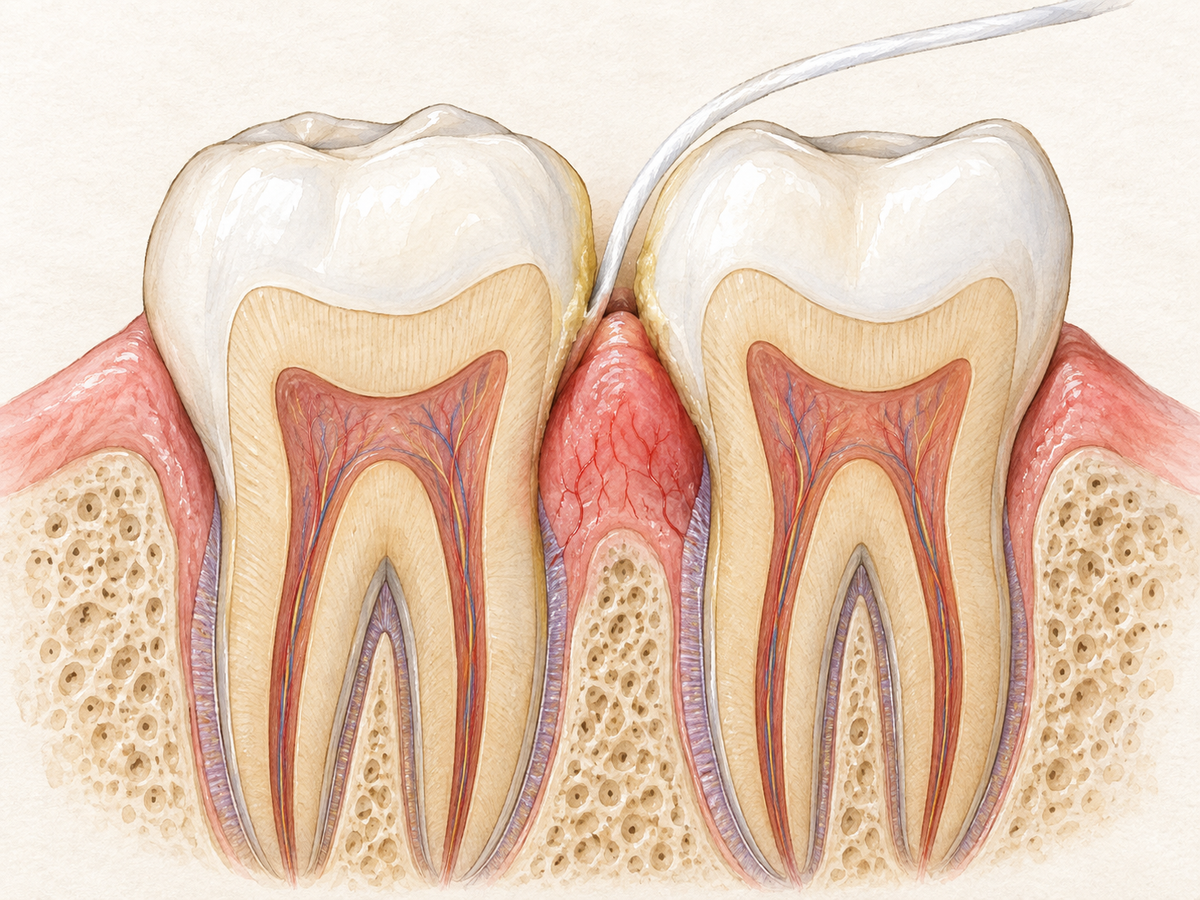
Dental plaque is a sticky film of bacteria that forms on teeth every day. When plaque sits along the gumline — the edge where the tooth meets the gum — it can trigger gingival inflammation, meaning the gums become swollen, red, and tender.
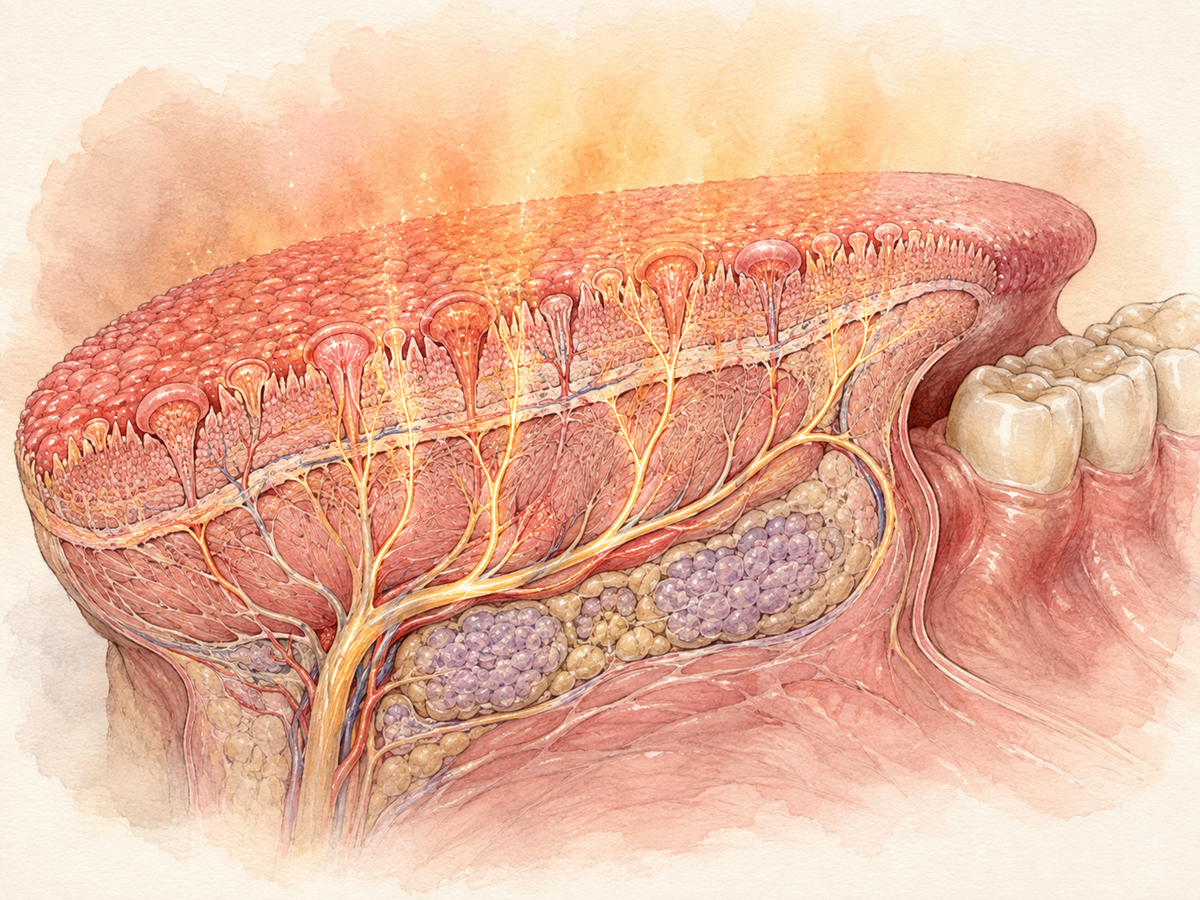
The gum tissue contains tiny blood vessels called capillaries. Inflamed gum tissue makes those capillaries weak and easy to break. When floss touches or slides under the gumline, it can disturb that fragile tissue and cause gingival bleeding.
This kind of bleeding is a common signal to improve cleaning between the teeth, not a reason to panic. The goal is to remove the plaque that is causing the irritation. Once that happens, the gum tissue can calm down.
Is It Normal or a Warning Sign?
It helps to look at the pattern of bleeding.
- If you are new to flossing, some light pink bleeding is common.
- With gentle daily flossing, that bleeding should fade within about one to two weeks.
- Healthy gums should not bleed regularly.
- Occasional light pink is usually less concerning.
- Heavy, painful, or persistent bleeding is a warning sign.
| What can be normal | Worth a dental visit |
|---|---|
| Light pink when flossing | Heavy or ongoing bleeding |
| Occasional, early in a new flossing habit | Bleeding every time, even with gentle technique |
| Improves within 1–2 weeks | Does not improve after 1–2 weeks |
| No pain or swelling | Pain, swelling, or tenderness |
Should You Stop Flossing?
The short answer is no for most people. Stopping flossing lets plaque stay between the teeth, and that can make gum inflammation worse over time. Flossing plus toothbrushing may reduce gum inflammation more than brushing alone, according to a Cochrane review of flossing studies. The benefit is small and the evidence is not perfect, but it points in the same direction: gentle, consistent cleaning helps.
There are a few exceptions. Skip flossing for now and call a dentist if you have:
- severe bleeding that is hard to stop,
- intense pain when flossing, or
- a bleeding disorder.
If you take blood thinners, do not stop your medicine on your own. Talk with a dentist or doctor first. For most people, the rule is consistency over intensity: floss gently every day rather than flossing hard occasionally.
Common Causes Beyond Plaque
Sometimes the bleeding has more than one cause. These factors can make gums bleed more easily, even when plaque is present.
- Gingivitis — early gum disease caused by plaque. Gums may look red, swollen, and bleed easily. It can usually improve with better cleaning and professional care.
- Periodontitis — more advanced gum disease that affects deeper tissues and bone. Bleeding can come from deeper pockets around the teeth, especially molars, according to a study on persistent gum bleeding.
- Aggressive flossing — snapping floss into the gums or sawing hard can cause cuts and irritation.
- Ill-fitting dental work — fillings, crowns, or other restorations that do not fit well can trap plaque and irritate the gum edge.
- Blood thinners — anticoagulant and antiplatelet medicines can make gums more prone to bleeding, especially if gum disease is already present.
- Pregnancy hormones — higher estrogen and progesterone make gums more sensitive to plaque. Pregnancy-related gum inflammation is common, according to a review on hormonal changes and gum health.
- Diabetes — can increase inflammation and make gum problems worse, according to a consensus report on gum health and disease.
- Smoking — harms gum tissue and is a major risk factor for gum disease. It can also change blood flow in a way that masks early bleeding.
- Vitamin deficiencies — severe vitamin C deficiency can weaken the walls of tiny blood vessels and make bleeding more likely.
Try not to treat bleeding as a personal failure. It is a clue to investigate with your dentist, especially when it does not improve with gentle care.
Red Flags: When to See a Dentist
Book a dental exam if you notice any of these:
- bleeding that lasts more than two weeks despite gentle daily flossing
- gums that bleed on their own, without brushing or flossing
- swollen, tender, or painful gums
- gums that are pulling away from the teeth
- loose teeth or teeth that feel like they have shifted
- persistent bad breath
- pain when chewing
Early treatment can help reverse gingivitis and prevent it from progressing to periodontitis, because gingivitis is the early stage that can lead to periodontitis, according to clinical guidance on gum conditions. Taking action early is the safest path.
How to Floss Without Irritating Your Gums
The way you floss matters. A gentle technique cleans the gumline without causing extra trauma.
- Break off about 18 inches of floss.
- Wind most of it around your middle fingers, leaving a few inches to work with.
- Slide the floss gently between two teeth. Do not snap it down into the gums.
- Curve the floss into a C-shape against one tooth.
- Gently move the floss up and down against the side of that tooth, going just under the gumline.
- Repeat on the other tooth, then use a clean section of floss as you move to the next space.
If floss is hard to hold, floss picks or interdental brushes can be easier to use. A water flosser is another option. These tools can help, but they still need to be part of a gentle daily routine. The best tool is the one you can use carefully every day.
Some studies suggest that interdental brushes and water flossers may do a better job of reducing gum bleeding than floss for some people, especially when there is space or dexterity is an issue, according to a network meta-analysis of interdental cleaning methods. If you are not sure which tool fits your mouth, ask a dentist or hygienist to show you.
Expect some improvement within one to two weeks of correct, consistent flossing. If nothing changes, that is another reason to get a professional look.
At-Home and Professional Fixes
At home, focus on gentle, consistent care:
- Brush twice a day with a soft-bristled toothbrush.
- Clean between the teeth once a day with floss or another interdental tool.
- Use an antiseptic mouth rinse only if your dentist recommends it. Routine use is not needed for everyone, and short-term use may be considered in certain situations, according to clinical guidance.
- Eat a balanced diet and drink enough water.
- If you smoke, quitting supports gum health.
In the dental office, treatment can remove the plaque and hardened deposits that home care cannot reach.
| Professional option | What it does |
|---|---|
| Routine cleaning | Removes plaque and tartar above and just below the gumline |
| Scaling and root planing | Deep cleaning below the gumline to clear bacteria and smooth roots |
| Periodontal maintenance | Ongoing visits to keep gum disease from returning or worsening |
| Medication review | Checks whether prescriptions are adding to bleeding risk |
A medication review is especially useful if you take blood thinners or antiplatelet medicines. Your dentist may need to coordinate with your doctor, but you should not stop prescribed medicines without medical advice.
Preventing Future Bleeding
Once the bleeding stops, keep the habit going:
- Clean gently between your teeth every day.
- Keep regular dental checkups.
- Replace worn fillings or crowns that trap plaque.
- Manage health conditions such as diabetes.
- Track when and how your gums bleed. If it returns, note whether it happens with flossing, brushing, or on its own. That pattern can help your dentist figure out the cause.
If bleeding persists after one to two weeks of gentle daily cleaning, schedule a dental visit. That is the clearest next step, and it gives you the best chance to catch and fix gum problems early.
This article has been reviewed by an oral health professional for accuracy. It is intended to provide general educational information and should not be used as a substitute for personalized medical advice, diagnosis, or treatment. If you have questions or concerns about your oral health, please consult a dentist, physician, or other qualified healthcare provider.