





Yes, toothpaste can expire, but the main concern is lost effectiveness, not sudden danger. The expiration date tells you how long the formula—especially fluoride, the cavity-fighting ingredient—should stay stable and work well. A slightly expired tube is usually safe to use, but it may not protect your teeth as well as a fresh one. If you rely on fluoride toothpaste for cavity prevention, replace it when in doubt.
Throw the tube out right away if it has mold, a foul smell, separated liquid, or hard, dried-out paste.
What the Expiration Date Actually Means
The date on a toothpaste tube is not usually a hard safety cutoff. It is more like a performance promise. In a fluoride toothpaste, the date mainly reflects how long the fluoride should stay available to strengthen teeth and help prevent cavities.
Fluoride toothpaste often carries a date that works like a medicine expiration date because fluoride is the active ingredient. Other toothpastes may only have a cosmetic best-by or freshness date. Either way, old toothpaste does not typically become harmful. It may simply do a weaker job.
That weaker job matters. One study found that a fluoride toothpaste sample seven years past its expiration date had a significant drop in the fluoride available during brushing. Analysis of 1-minute potentially available fluoride from dentifrice
The printed date is not always a direct guarantee of fluoride strength. One commentary notes that toothpaste expiration dating is often tied to physical shelf life, not a direct measure of how much usable fluoride remains. Efficacy of fluoride toothpaste over time
How Long It Lasts After Opening
A practical rule of thumb is that an unopened tube can stay stable for about two years from production. Once opened, it is best to use it within several months to a year. The exact range depends on the formula and how you store it.
Bathroom heat and moisture can speed up changes inside the tube. A loose cap can make this worse. If the date has passed but the paste looks, smells, and feels normal, it is probably still safe to use. It may just be less effective at cavity protection.
Why It Loses Effectiveness
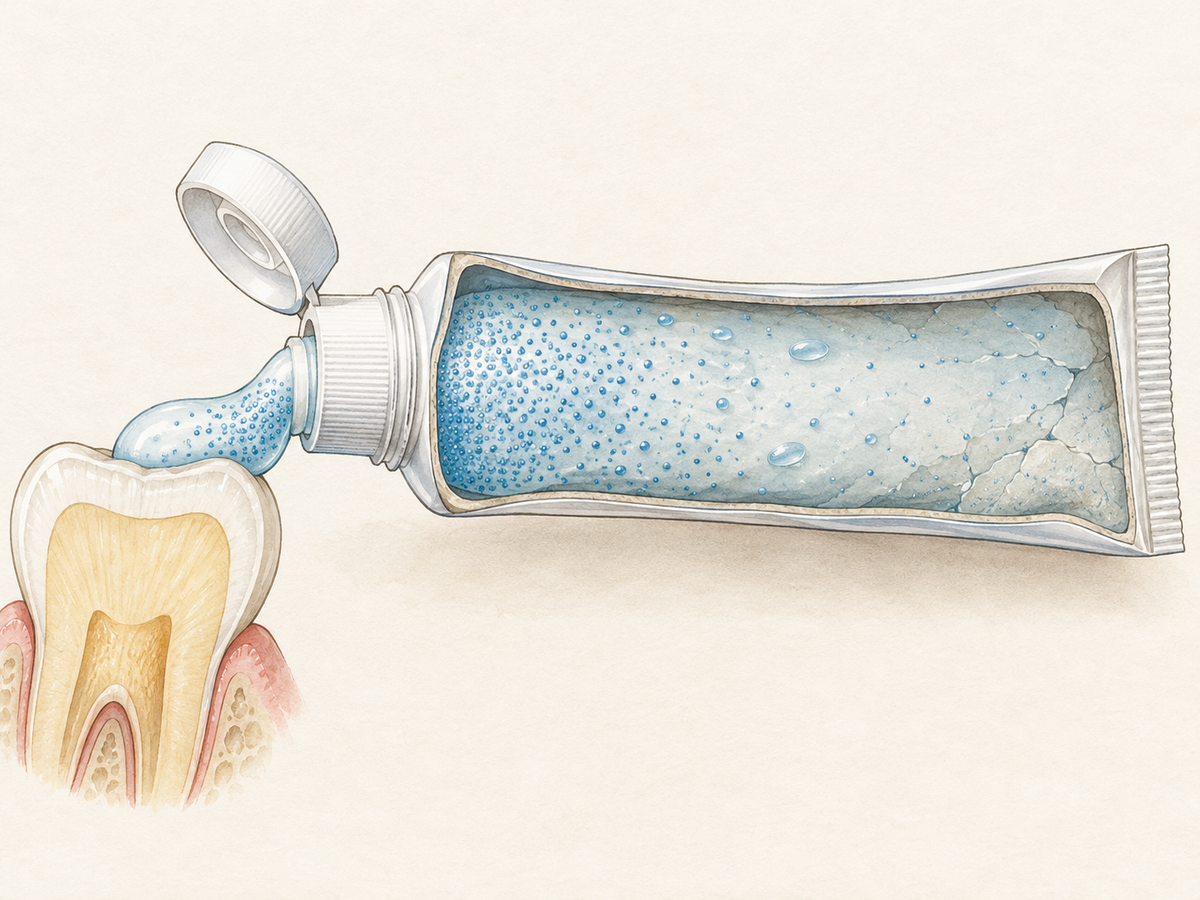
Toothpaste loses effectiveness because the working ingredients change over time. Fluoride can degrade, separate, or spread unevenly through the paste. That means one squeeze may not deliver the same protection as another.
Drying out is another problem. Toothpastes contain humectants, which are moisture-holding ingredients. When those dry out, the paste can harden. Flavor and whitening agents may also fade. The result may be a paste that tastes bland, feels gritty, or looks odd—and does not work as well.
Researchers have seen this in real products. In one study, total soluble fluoride fell by about 22% after nine months of storage, and it dropped below the level often considered necessary for cavity prevention. Fluoride stability in dentifrices stored in schools in a town of northern Brazil
The drop varies by formula. Some toothpastes with certain abrasives and fluoride types lose available fluoride faster than others. Fluoride availability and stability of Japanese dentifrices
Safety and Warning Signs
Using slightly expired toothpaste is rarely dangerous. The bigger concern is that it may not protect your teeth as well. But there are times to stop using it immediately.
Throw the tube away if you notice:
- Mold or dark spots.
- A foul or unusual smell.
- Liquid that has separated from the paste.
- Hard, dried-out paste that is difficult to squeeze.
- A major color change.
People with weakened immune systems, and anyone using prescription toothpaste, should be more cautious. Replace those products by the date. Do not brush with a visibly spoiled tube.
The opening of a used toothpaste tube can also pick up germs. One older study found cavity-related bacteria at the opening of used toothpaste tubes. Contamination of toothpaste and toothbrush by Streptococcus mutans
Does Toothpaste Type Matter?
Yes. Some toothpastes age better than others.
| Toothpaste type | Expiration note |
|---|---|
| Fluoride toothpaste | The date matters most. Fluoride can become less available over time. |
| Whitening toothpaste | Whitening agents may fade, but the paste may still be usable. |
| Prescription toothpaste | Treat it like medicine. Replace it before or at the date. |
| Natural toothpaste | May spoil faster if it contains fewer preservatives. |
| Homemade toothpaste | Spoils the fastest. Make small batches and watch for changes. |
If you use a prescription paste for cavity or gum treatment, be the strictest about the date. That product is acting as a medical treatment, not just a cosmetic freshener.
Storage Makes a Difference
Keep toothpaste in a cool, dry place with the cap tightly closed. That slows the breakdown of fluoride and helps keep germs out.
Avoid these storage mistakes:
- Leaving toothpaste in a hot car.
- Storing it where shower spray can hit the tube.
- Letting paste dry around the cap.
- Sharing a tube when someone is sick.
A dirty cap can introduce water and bacteria into the opening. One study found more bacteria on toothpaste openings used by multiple people than on tubes used by one person. Microbial contamination of toothpaste tube orifice
When to Replace It Anyway
When in doubt, replace it. That is especially true for fluoride toothpaste if you rely on it for cavity prevention. A tube that is old, hardened, or questionable is not worth the risk to your teeth.
A simple routine helps:
- Check the date before you buy a new tube.
- Write the open date on the tube with a permanent marker.
- Use opened tubes within several months to a year.
- If the paste changes in look, smell, or texture, stop using it.
If the old tube is not visibly spoiled, you can still use it for small cleaning tasks like shining a sink or cleaning scuffed shoes. Just do not brush your teeth with it if the date is far gone or the paste seems off. When cavity protection matters, a fresh tube is the safest choice.
This article has been reviewed by an oral health professional for accuracy. It is intended to provide general educational information and should not be used as a substitute for personalized medical advice, diagnosis, or treatment. If you have questions or concerns about your oral health, please consult a dentist, physician, or other qualified healthcare provider.