
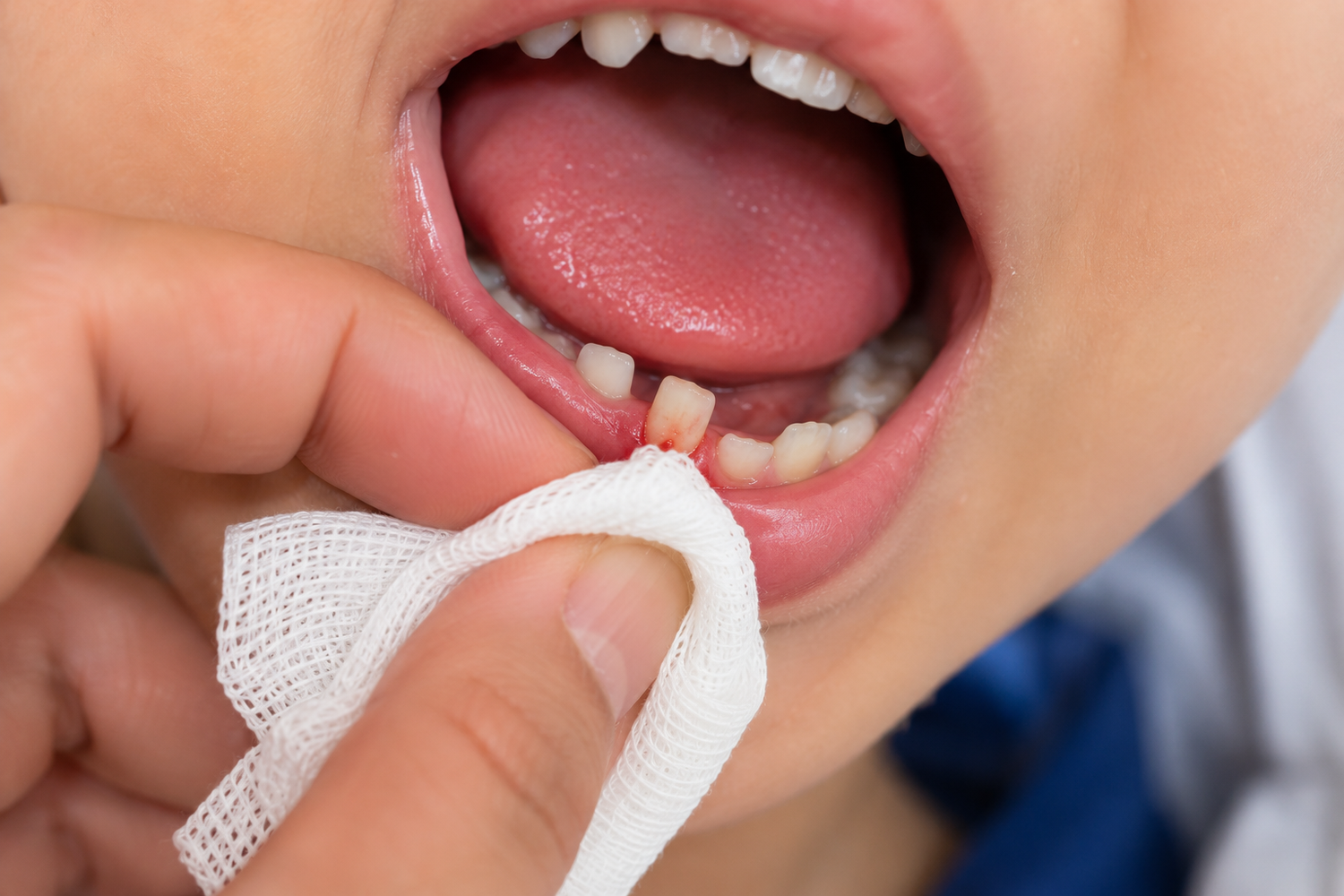
TL;DR: Most baby teeth will fall out on their own — no pulling required. If you’re certain a tooth is truly ready (movement in every direction, no pain, no bleeding gums), a gentle wiggle with clean gauze is the only safe method. Never force a tooth or use string tied to a doorknob. When in doubt, always call your pediatric dentist.
There’s something universally thrilling about a loose tooth. It’s a rite of passage for kids and a test of nerve for parents. The question always comes: “Should I pull it?” The short answer is almost always let nature take its course. But if a tooth is dangling by a thread and your child is begging for help, you can safely and gently assist — if you know exactly what you’re doing.

Is the Tooth Truly Ready?
The single biggest mistake parents make is pulling a tooth too early. A primary (baby) tooth loosens because the underlying permanent tooth gradually dissolves the baby tooth’s roots — a process called root resorption. When resorption is nearly complete, the tooth will feel almost weightless. If you tug on a tooth that still has significant roots attached, you risk snapping those roots off inside the gum, causing pain, infection, and possibly damage to the new tooth growing underneath.
Check these 4 signs of readiness before you even think about pulling:
- It moves in all directions. A tooth that only wiggles front-to-back still has ligament fibers holding it. A truly ready tooth will twist freely and even lean sideways without resistance.
- There’s no pain when you wiggle. If your child flinches, stop. Discomfort means the tooth isn’t ready.
- The gum looks healthy. Pink or slightly pale pink is normal. Redness, swelling, or a bubble on the gum signals infection — pulling can make it worse.
- Minimal bleeding. A tiny pinprick of blood is okay if the tooth is extremely loose, but if the gum bleeds heavily when you test it, leave it alone.
A note on airway safety: Even naturally loose teeth can be aspirated if they dislodge unexpectedly, especially in children who cannot cooperate. If your child has difficulty controlling their head or has a strong gag reflex, it’s far safer to let the tooth fall out during eating or sleep — or to have a dentist remove it with proper airway protection.
Pain-Free Pulling Methods (That Actually Work)
Once you’ve confirmed the tooth is genuinely ready, the goal is to make the removal quick and tear-free. The technique below minimizes bleeding and reduces anxiety.
What you need
- A piece of clean, dry gauze
- Clean hands (wash for at least 20 seconds)
- A calm, distraction-rich environment

Step-by-step: the gauze wiggle
- Position yourselves. Sit your child somewhere comfortable, with good light. If possible, have them recline slightly so you can see clearly.
- Dry the tooth. Use the gauze to blot any saliva off the tooth. A dry surface gives you a much better grip.
- Grasp gently but firmly. Place the gauze over the tooth and hold it between your thumb and forefinger. You want full control, not a death grip.
- Wiggle, then twist. Gently move the tooth back and forth a few times, then give it a tiny rotational twist in one direction. The periodontal ligament is what you’re detaching — a slow twist is more effective than a fast yank.
- Slide it out. The tooth should slip out effortlessly. If you feel any real resistance, stop immediately. It’s not ready.
Quick tip: While you work, ask your child to wiggle their toes or sing a silly song. Distraction lowers the stress hormones that make them tense up.
What about the “string and doorknob” trick?
Absolutely not. A case report from Somalia documented a 9-year-old girl who aspirated her tooth into her right bronchus after a hand-based extraction at home. She developed persistent cough, shortness of breath, and required rigid bronchoscopy under general anesthesia to retrieve it. Uncontrolled force and lack of airway protection during extraction can turn a wiggly tooth into a life-threatening emergency. Never tie anything to a tooth and pull with sudden force.
Common Mistakes That Can Hurt Your Child
Even well-meaning parents can make errors that lead to a traumatic experience. Here are the top missteps to avoid.
- Pulling a tooth just because it’s a little wiggly. Until the root is almost fully resorbed, pulling can leave a fragment behind, causing infection or a retained root that requires surgical removal.
- Using tools at home. Unsterilized tweezers, pliers, or nail clippers can introduce bacteria deep into the socket and damage the neighboring permanent tooth bud.
- Ignoring the child’s fear. If a child is screaming or resisting, the extraction is no longer safe. A panicked child may inhale suddenly at the wrong moment, increasing aspiration risk.
- Assuming all loose teeth are baby teeth. In adolescents and adults, a loose tooth is rarely a normal exfoliation. It’s often a sign of advanced periodontal disease or trauma. Those teeth must be evaluated by a dentist, never pulled at home.
- Using numbing gels incorrectly. While an over-the-counter benzocaine gel (for children over 2) can be applied sparingly to the gum before pulling, never use it in infants and always follow age-specific dosing. Topical benzocaine can cause a rare but serious condition called methemoglobinemia if overused.
After the Tooth Comes Out
The moment the tooth pops free is exciting, but your job isn’t over. Follow these steps to protect the healing socket.
Stop the bleeding
Fold a fresh piece of gauze into a small pad and have your child bite down firmly on it for 15–20 minutes. A little oozing is normal; the socket will fill with a blood clot that kickstarts healing. Do not let your child rinse, spit, or use a straw for the next 24 hours — the suction can dislodge the clot and cause a dry socket, which is painful and delays healing.
Offer a cool treat
A sugar-free popsicle or a small cup of cold yogurt works wonders. The cold constricts blood vessels and soothes the gum while giving your child a positive reward.
Inspect the area
Once the bleeding stops, take a look with a flashlight. The socket should be a clean, reddish hole. If you see a sharp, hard fragment still in the gum, or if your child reports increasing pain over the next few hours, a root tip may have broken off. Call your dentist.
Hygiene the gentle way
The International Association of Dental Traumatology recommends cleaning the injured area with a soft brush or cotton swab and using an alcohol-free chlorhexidine mouth rinse applied topically twice a day to prevent plaque buildup and infection. For daily maintenance, using an electric toothbrush with a soft brush head around the extraction site lets your child clean without aggressive scrubbing that could disturb the clot. Many parents also find that a low-frequency electric toothbrush in the days leading up to pulling helps gently nudge a very loose tooth without any force at all.
Celebrate — without risky traditions
Tuck the tooth under the pillow, snap a toothless grin photo, or start a new family tradition. Just avoid encouraging the child to poke the socket with their tongue or fingers constantly — that can introduce bacteria and delay healing.
When to Stop and Call the Dentist
Some situations demand professional help, no matter how loose the tooth looks.
Pick up the phone immediately if you notice:
- The tooth is resisting gentle pressure after days of wiggling (possible ankylosis, where the tooth is fused to the bone).
- Bleeding that won’t stop even after 30 minutes of firm pressure.
- Swelling, pus, or a fever — signs of an abscess or spreading infection.
- The loose tooth is a permanent adult tooth.
- Your child has a medical condition like a bleeding disorder, congenital heart defect requiring antibiotic prophylaxis, or an immune deficiency.
- You spot a bluish-purple bubble on the gum over an erupting permanent tooth — that’s a harmless eruption cyst and doesn’t mean the baby tooth needs pulling.
A pediatric dentist can remove a stubborn tooth in seconds with topical numbing and the right instruments, all while protecting the airway. It’s a far better experience than a traumatic home attempt.
If you remember nothing else, remember this: The best way to pull a loose tooth is to not pull it at all. Encourage your child to wiggle it with their own tongue or eat crunchy apples and carrots. Most teeth will fall out when the time is right — often into a napkin, a sandwich, or a hand, with zero drama. And when that happens, you’ve both earned the tooth fairy’s visit.





Leave a comment
This site is protected by hCaptcha and the hCaptcha Privacy Policy and Terms of Service apply.