




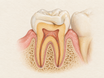

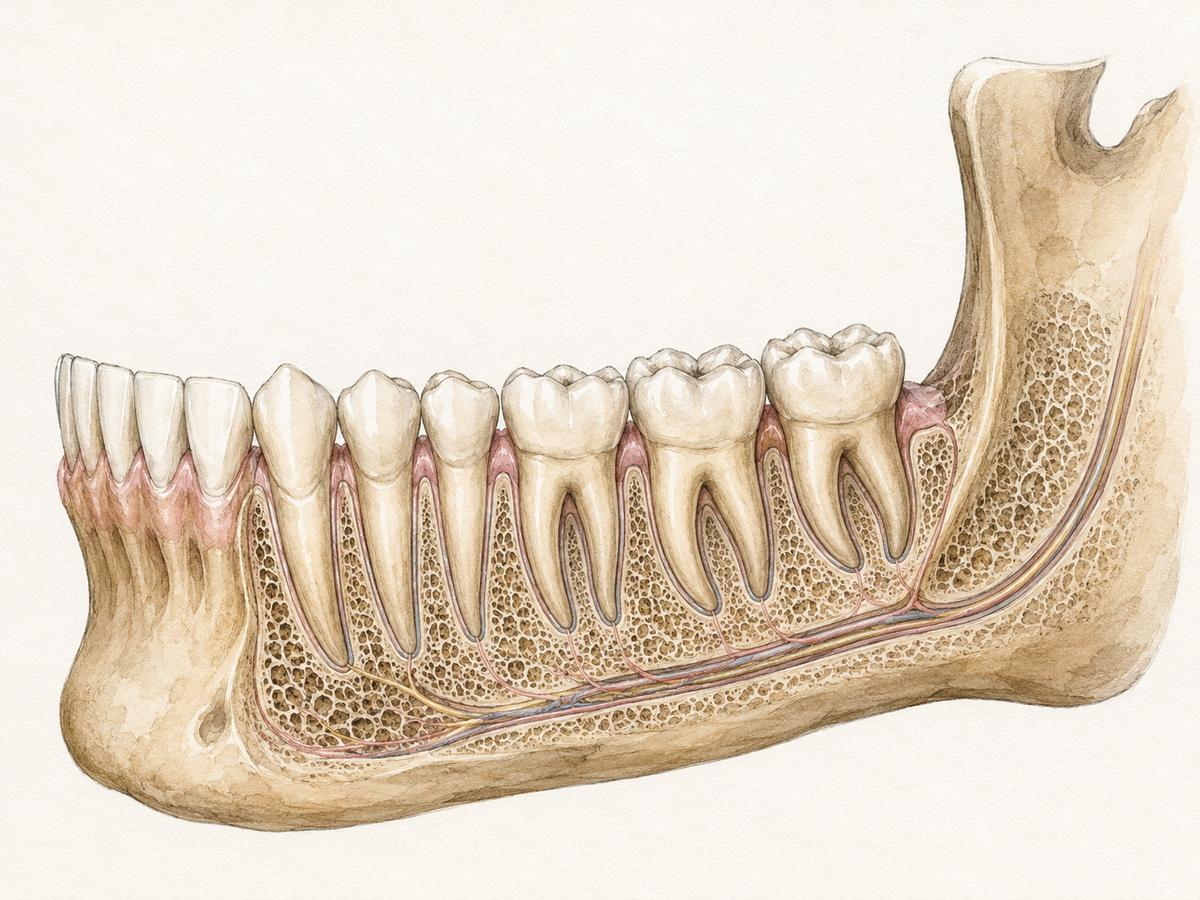
Yes. Adults usually have 32 permanent teeth—16 in the upper jaw and 16 in the lower jaw. They fall into four main types: incisors, canines, premolars, and molars. Each type has a simple job: incisors cut, canines tear, premolars crush, and molars grind. Wisdom teeth are really just the last molars, and not everyone has all four.
The Four Main Types and Their Jobs
Adult teeth are called permanent teeth because they are meant to last. The full set usually has 32 teeth, split evenly between the top and bottom jaws. Dentists group them by shape and job, not just location.
- Incisors: the thin-edged front teeth that cut food.
- Canines: the pointed teeth that tear food.
- Premolars: the flatter teeth behind canines that crush and help tear food.
- Molars: the large back teeth that grind food.
Anatomy references on the adult teeth describe this standard grouping: incisors, canines, premolars, and molars. Third molars are a special subset of molars. They sit at the very back and are commonly called wisdom teeth.
Incisors and Canines: Front Teeth
Look in a mirror and you can spot the front group easily.
There are eight incisors total: four on top and four on the bottom. The two middle ones are central incisors. The two next to them, still in the front group, are lateral incisors. These are the teeth you use to bite into an apple or sandwich.
Next to the incisors sit the four canines: two on top and two on the bottom. They are the pointed teeth at the corners of the front group. You may also hear them called cuspids or eye teeth. They have a strong shape for tearing food and helping guide the jaw.
Premolars and Molars: Back Teeth
Behind the canines are the eight premolars: two in each corner of the mouth. You may see them called bicuspids. Their broader surface helps crush and tear food before it reaches the back teeth.
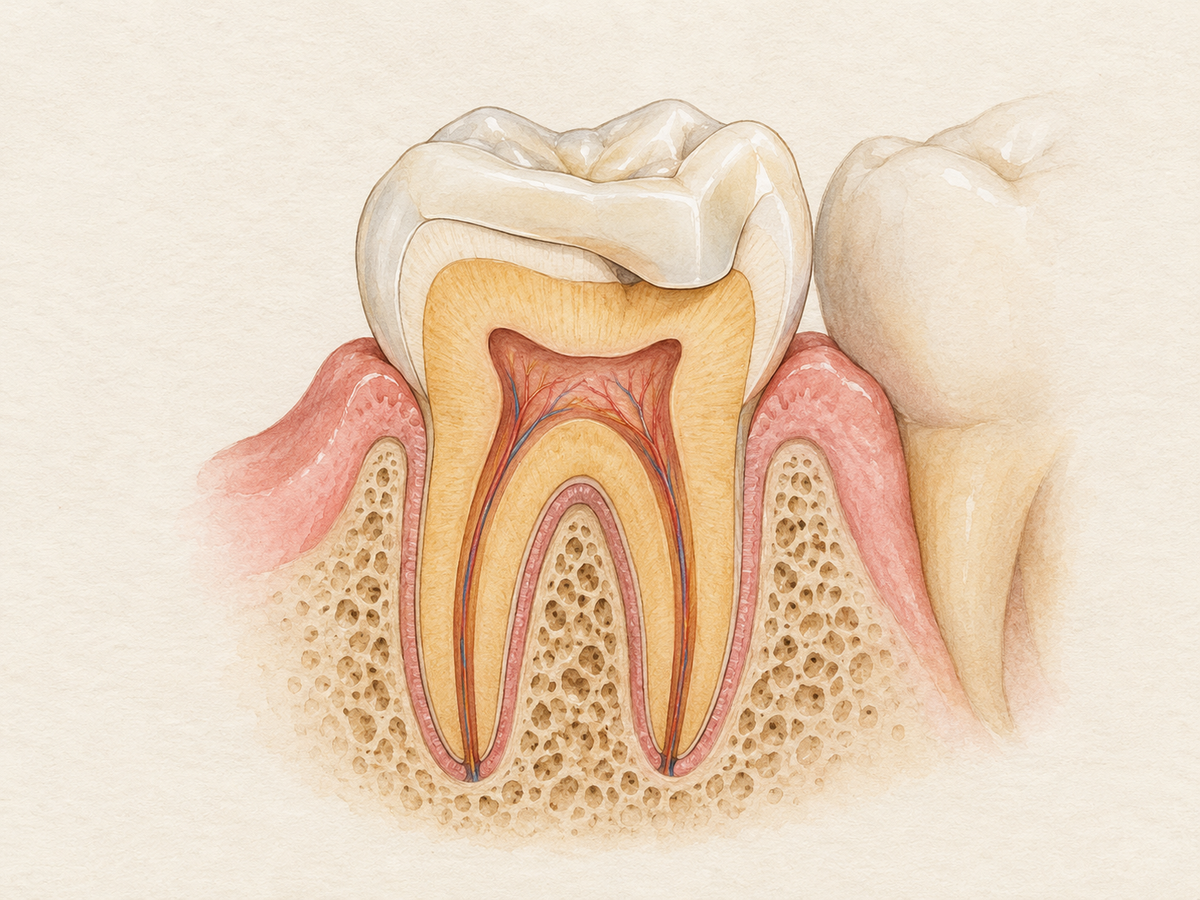
The molars are the large teeth farther back. Most adults have first molars and second molars in each corner. Their flatter tops are built for grinding food into smaller pieces.
There is an important difference between baby teeth and adult teeth here. Baby teeth have molars, but they do not have premolars. In the adult mouth, baby molars are replaced by permanent premolars as the jaws grow, according to tooth anatomy sources.
Wisdom Teeth and Third Molars
Third molars are the wisdom teeth. They are the last four teeth at the very back, one in each corner, if all four form.
Two words come up often with wisdom teeth:
- Eruption means a tooth coming through the gums.
- Impaction means a tooth is blocked by gum tissue or bone from fully coming through.
Wisdom teeth often come in late, at an angle, or not at all. One review found that about 24% of people worldwide have at least one impacted third molar, so it is common but far from everyone (study on third molar impaction).
Not every impacted wisdom tooth needs to be removed. If there is no pain, infection, decay, or damage to the neighboring tooth, a dentist may recommend simply watching it with routine checkups (clinical guidance on third molars). Removal is more likely to be recommended when there is infection, repeated pain, decay, or harm to the tooth next to it (review on third molar extraction indications).
See a dentist if you notice:
- Pain at the very back of the jaw
- Swollen or tender gums over a wisdom tooth
- Trouble opening your mouth
- A bad taste or pus near a back tooth
- A neighboring tooth feeling sore or sensitive
Baby Teeth vs Permanent Teeth Names
Baby teeth are called primary teeth. Children usually have 20 baby teeth: 10 on top and 10 on the bottom. Adults usually have 32 permanent teeth.
Baby teeth include incisors, canines, and molars. They do not include premolars. As a child grows, the baby molars are replaced by adult premolars (anatomy of primary teeth).
The general pattern for baby teeth is:
| Baby tooth type | Usually appears | Usually sheds |
|---|---|---|
| Lower central incisors | 6–10 months | 6–7 years |
| Upper central incisors | 8–12 months | 6–7 years |
| Lateral incisors | 9–16 months | 7–8 years |
| Canines | 16–23 months | 10–12 years |
| First molars | 13–19 months | 9–11 years |
| Second molars | 23–33 months | 10–12 years |
These are ranges, not exact deadlines. Some children naturally run a little earlier or later.
How Dentists Number Teeth
A dentist may call the same tooth by name, number, or quadrant. A quadrant is one of four sections of the mouth: upper right, upper left, lower left, and lower right.
The most common systems are:
- Universal Numbering System: used mainly in the United States. Adult teeth are numbered 1 through 32. Tooth #1 is the upper right wisdom tooth, and #32 is the lower right wisdom tooth (tooth-coding systems).
- FDI two-digit system: used in many other countries. The first digit is the quadrant, and the second digit is the tooth position from the middle. For example, FDI 16 means quadrant 1, tooth 6, which is the upper right first molar (source on numbering precision).
- Palmer notation: uses quadrant symbols around a short number, though it is less common in everyday notes.
That FDI example can be confusing. In FDI, 16 is an upper right first molar. In Universal, 16 is an upper left wisdom tooth. If your dental note says a number, check which system the office uses.
Common Confusions and Memory Tips
Some names are just different labels for the same teeth:
- Canines = cuspids = eye teeth
- Premolars = bicuspids
- Wisdom teeth = third molars
A simple front-to-back order is:
- Incisors
- Canines
- Premolars
- Molars
One warning: online tooth diagrams may label left and right from the dentist’s view, not your view. You may be looking at an image where your right side appears on the left side of the page (tooth-coding orientation reference). If the labels feel backward, that is often why.
When Tooth Names Matter for Care
Knowing a few tooth names helps you describe problems more clearly.
For example, saying “my upper left first molar hurts” tells the dentist more than “one of my back top teeth hurts.” Names also help when you talk about flossing around a specific tooth, braces, crowns, or extractions.
If you are not sure of the exact name, use a general location instead: “top left, near the back, in front of my wisdom tooth.” Your dentist can confirm the exact tooth. At your next visit, point to the area and ask what that tooth is called.
This article has been reviewed by an oral health professional for accuracy. It is intended to provide general educational information and should not be used as a substitute for personalized medical advice, diagnosis, or treatment. If you have questions or concerns about your oral health, please consult a dentist, physician, or other qualified healthcare provider.