















Most black spots or a black coating on the tongue are harmless and caused by a condition called black hairy tongue, which happens when tiny tongue projections become enlarged and trap stains. Other black spots may be normal color changes, a reaction to a medication, or a harmless dark mark from dental work. A small number could signal a more serious problem, so it is worth knowing which signs need a professional look, not a wait-and-see approach.
Most black spots on the tongue are benign. The key is figuring out whether you are looking at a stain, an overgrowth, a normal dark spot, or a change that needs a dentist or doctor.
Black Hairy Tongue vs. Other Black Spots
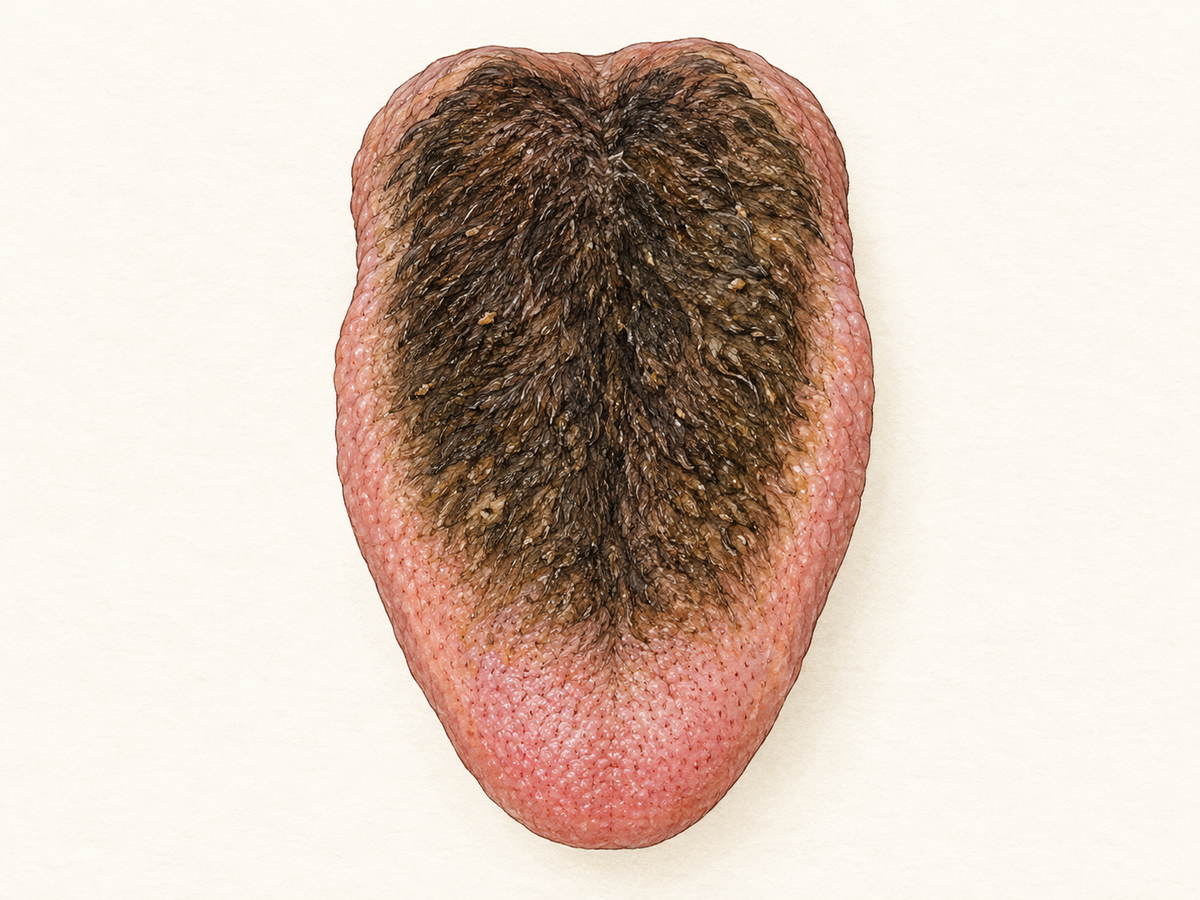
Black hairy tongue is the most common reason a tongue looks black or dark brown. It is a harmless condition, even though it can look alarming.
The dark, fuzzy appearance comes from elongated lingual papillae. Papillae are the small bumpy projections on the top of the tongue. Normally they stay short. When they grow longer than usual, they can trap dead skin cells, food particles, and natural bacteria and yeast, or germs and fungi, from the mouth. Stains from coffee, tea, tobacco, and other substances then settle into that buildup, creating a dark carpet-like look.
Black hairy tongue mostly appears on the top and middle-back of the tongue. It usually spares the tip and sides. The color can range from yellowish brown to brownish black or even greenish, depending on what is trapped there.
Not every black spot is black hairy tongue. Some people simply have darker pigmentation, or normal color variation, in the mouth. Others may have a true dark spot from past trauma, such as accidentally biting the tongue, or from a medication effect. In rare cases, a dark spot could be a melanoma, a serious form of skin cancer that can occur in the mouth.
A useful way to think about it:
- A dark, fuzzy, widespread coating on the top of the tongue is often black hairy tongue.
- A single flat black or brown spot that does not wipe away may be pigmentation, an injury mark, or something that needs checking.
- A changing, growing, or raised dark spot is more concerning.
Causes: Stains, Habits, and Medications
Many black tongue changes come from extrinsic stains, meaning surface stains that sit on or within the tongue surface. These are not usually a sign of disease.
Common staining triggers include:
- Tobacco and betel use: smoking, chewing tobacco, or using betel quid can stain the tongue dark.
- Coffee and tea: these dark drinks can add color when the tongue surface traps them.
- Iron and bismuth: iron supplements and bismuth-containing medicines, such as some upset-stomach remedies, can cause temporary dark discoloration.
- Antibiotics and chemotherapy: some infection medicines and cancer medicines can change the normal balance of germs in the mouth. That can allow black hairy tongue to develop.
- Oxidizing mouthwashes: some oxygen-releasing mouth rinses may contribute to the condition in susceptible people.
- Dry mouth: reduced saliva makes it harder for the tongue to clean itself naturally.
Black hairy tongue is often multifactorial, meaning several causes overlap. For example, someone who smokes, drinks a lot of coffee, has dry mouth, and recently took antibiotics may be more likely to develop it than someone with only one trigger.
When a stain is the cause, the color often fades once the trigger is removed. That may take days to weeks.
Causes: Oral and Systemic Conditions
True dark spots can also come from benign pigment changes or other health conditions.
Benign pigment spots include:
- Oral melanotic macules: flat brown or black spots in the mouth. They are harmless, but a dentist may still recommend a small tissue sample to confirm the diagnosis because they can look like something more serious.
- Amalgam tattoos: dark gray or blue marks from dental amalgam filling material. This can happen when tiny particles of filling material settle into the tissue. Amalgam tattoos are harmless and do not need treatment.
- Racial or ethnic pigmentation: normal inherited dark color in the gums, cheeks, or tongue. This is common and not a disease.
Less commonly, dark spots may connect to a whole-body condition, such as:
- Addison’s disease, an adrenal hormone disorder that can cause dark patches in the mouth.
- Peutz-Jeghers syndrome, a rare inherited condition linked with dark spots and digestive tract polyps.
- Nutritional deficiencies, including vitamin or mineral shortages, may occasionally contribute to tongue changes.
Fungal or bacterial overgrowth can also darken the tongue surface. That is part of what happens in many cases of black hairy tongue, but an actual infection may need specific treatment.
Red Flags: When to Seek Care Fast
Most black spots are harmless. Still, some features are worth checking quickly.
See a dentist, oral medicine specialist, or dermatologist if you notice any of these warning signs:
- A single irregular dark patch that is uneven in shape or color.
- Rapid growth in a spot over days to weeks.
- Pain, bleeding, or ulceration in the dark area.
- Firmness or numbness in the spot or surrounding tongue.
- Swollen neck lymph nodes, meaning lumps in the neck that appear along with the tongue change.
If a dark spot looks suspicious, a dentist may recommend a biopsy, which means taking a small tissue sample for testing. That is the most reliable way to confirm what a persistent or changing spot is.
Do not ignore these red flags at home. Even though most black spots are benign, the concerning ones need a professional evaluation rather than a long observation period.
Treatment by Cause: What Actually Works
Treatment depends on what is causing the black spot.
For black hairy tongue, the main approach is gentle cleaning and removing triggers:
- Improve oral hygiene.
- Use a tongue scraper or soft toothbrush to gently clean the tongue once or twice daily.
- Stop or reduce staining habits, such as smoking or heavy coffee use.
- Treat dry mouth if it is present.
If a fungal or bacterial infection is contributing, a dentist or doctor may prescribe antifungals or antibiotics. Use these only as prescribed.
If a medication caused the tongue change, talk with the prescribing doctor before making any changes. Doctor-guided medication changes are essential. Do not stop a prescribed medicine on your own, because doing so could be unsafe or allow the original health problem to return.
For persistent pigmented lesions, treatment may include:
- Biopsy to confirm what the spot is.
- Laser treatment for some pigmented spots, especially when appearance is a concern.
- Surgical removal if the lesion needs to be fully taken out.
Not every pigmented spot needs treatment. A flat, stable, harmless spot may simply be watched over time.
Home Care and Habits That Help
Some practical steps can help reduce surface stains and keep the tongue healthier.
Helpful habits
- Brush the tongue gently with a soft brush or tongue scraper twice daily.
- Drink enough water to stay hydrated.
- Quit smoking or chewing tobacco.
- Limit heavy staining drinks such as coffee, tea, and dark sodas.
- Eat a balanced diet that includes raw fruits and vegetables, which can help gently clean the tongue surface.
What to avoid
- Do not scrub the tongue hard. Harsh brushing can irritate the tissue and make things worse.
- Do not use hydrogen peroxide as a home rinse unless a dentist or doctor specifically recommends it.
- Do not pick at the spot. Picking can cause pain, bleeding, and infection.
If you have been doing consistent gentle care for two weeks and the spot has not improved, see a dentist. That two-week check can help you understand whether home care is enough or whether a professional evaluation is needed.
How Long Until It Goes Away?
Timelines depend on the cause.
- Surface stains may fade in days to weeks after the trigger is removed.
- Black hairy tongue can improve over weeks to months with consistent gentle cleaning and trigger control.
- Amalgam tattoos may be permanent, though they are harmless.
- Oral melanotic macules may also be permanent baseline color changes.
The takeaway: do not expect every dark spot to disappear. A stable, painless, harmless spot may simply be part of how your mouth looks. But a spot that persists or changes needs follow-up rather than waiting indefinitely.
What to Ask at Your Appointment
Before you leave the dental chair, you want a clear sense of what is going on and what comes next.
Useful questions include:
- Is this pigmentation, an infection, or an overgrowth on the tongue?
- Could any of my medications or health conditions cause this?
- Do I need a biopsy or a referral to a specialist?
- What is the treatment plan, and what should I do at home?
- When should I come back if it does not improve or if anything changes?
These questions can help you leave with a clear diagnosis, a realistic plan, and a better idea of what to watch for. Most black tongue changes are manageable and benign, but knowing the difference between a stain, an overgrowth, and a spot that needs care puts you in control.
This article has been reviewed by an oral health professional for accuracy. It is intended to provide general educational information and should not be used as a substitute for personalized medical advice, diagnosis, or treatment. If you have questions or concerns about your oral health, please consult a dentist, physician, or other qualified healthcare provider.