











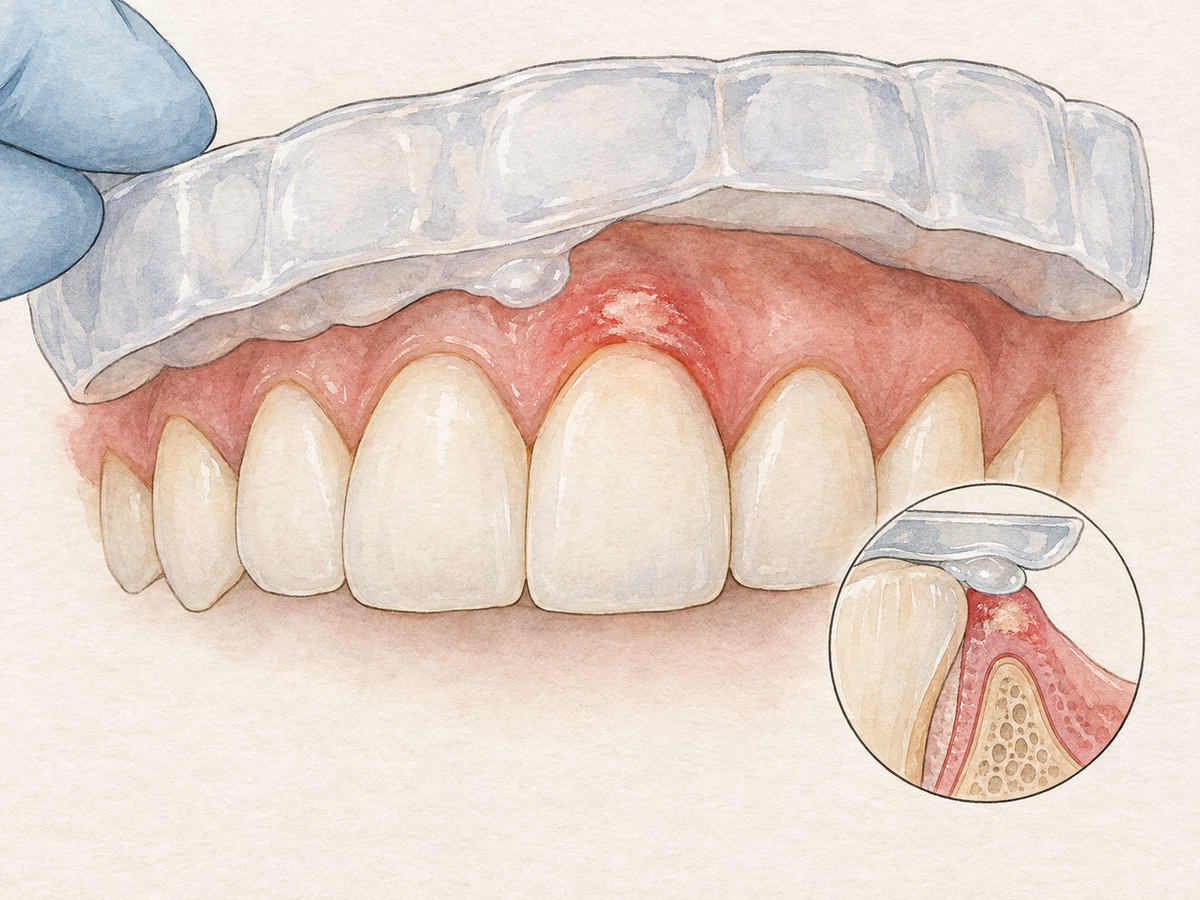
Burned gums after teeth whitening usually mean the whitening gel or strips touched your gumline for too long. Stop the treatment right away and rinse the area gently with lukewarm water. Most mild gum burns improve within a few days, but deeper ones can take one to two weeks.
Remove the whitener first. Do not try to push through sore or tender gums.
How to Tell It’s a Burn, Not Normal Sensitivity
Tooth whitening can make your teeth feel temporarily zingy or sensitive. That is different from a chemical gum burn, which is an injury to the gum tissue itself.
Normal sensitivity tends to be brief and felt mainly in your teeth. A gum burn shows up in the soft tissue around your teeth.
| Sign | Normal sensitivity | Possible gum burn |
|---|---|---|
| Where you feel it | Teeth | Gums or gumline |
| How it looks | Teeth look normal | Gums may look red, white, or swollen |
| How long it lasts | Usually brief | Lingers for hours or days |
| What makes it worse | Cold, air, or sweet foods | Touching, eating, or even at rest |
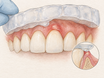
A burn may cause burning pain in the gums, a red gumline, a pale or white patch, swelling, or a tender spot. Symptoms may start during treatment or a few hours later. Peroxide-based whitening gels can irritate or burn gum tissue on contact, and high-concentration gels are more likely to do this, according to clinical guidance on tooth whitening safety.
Mild irritation usually means some soreness and slight redness that stays in one small area. More concerning signs include a large white or gray patch, blistering, an open sore, swelling that spreads, or pain that keeps getting worse.
First 24 Hours: Stop Whitening and Soothe
The first step is simple: remove the trays or strips immediately. Keeping the gel on the gum keeps the chemical in contact with the tissue.
Follow these steps:
- Take out the whitening tray or strip right away.
- Rinse gently with lukewarm water. A mild saltwater rinse can also help. Use about half a teaspoon of salt in a cup of warm water.
- Do not brush the irritated area hard. Let the gums rest.
- Stop all whitening products until your gums feel fully healed.
Rinsing with water right after exposure can help reduce the damage. If caught early, the tissue may return from a pale color to pink within minutes, according to safety guidance on peroxide dental products.
Safe Home Relief While Gums Heal
You can support healing with gentle comfort measures. The goal is to keep the area calm, not to mask a problem that is getting worse.
Helpful options include:
- A cold pack wrapped in a clean cloth on the outside of your cheek for short periods.
- Soft, mild foods that do not require much chewing.
- A dentist-approved oral gel if one has been recommended for you.
- Over-the-counter pain medicine if it is appropriate for you and you follow the label.
Avoid these while the gums heal:
- Mouthwash that contains alcohol.
- Peroxide rinses, especially high-strength ones.
- Hot, acidic, or spicy foods and drinks.
- Crunchy or sharp foods that can poke the sore area.
High-concentration peroxide can cause chemical injury to oral soft tissues, including redness or tissue sloughing, so adding more peroxide at home is not a good idea, according to a review on hydrogen peroxide safety in dentistry.
What Not to Do (Common Mistakes)
Some habits can delay healing or make the burn worse.
- Using whitening products again soon. This keeps the same irritant on damaged gums.
- Switching to whitening toothpaste. It can still irritate sore gum tissue.
- Smoking. It adds heat and more chemical irritation while your mouth is trying to heal.
- Flossing roughly around the area. Hard flossing can scrape already tender gum tissue.
- Putting undiluted essential oils on your gums. Concentrated oils can burn already sore tissue.
Overuse or misuse of over-the-counter whitening products can irritate gum tissue, so it helps to stop any unnecessary chemical exposure while you recover, according to a review of over-the-counter whitening products.
How Long Healing Usually Takes
Most mild gum irritation improves within a few days. A more significant burn may take one to two weeks. Expect the pain and soreness to steadily get better, not suddenly worse.
Gum color may take longer to return to normal than the pain. That is common. If a pale or white area does not shrink, spreads, or becomes painful, call a dentist.
Do not start whitening again until your gums are fully healed. Re-treatment too soon can re-injure the tissue. If a severe chemical burn is left on the gums for a long time, the pain from blistering can last one to two weeks, according to safety data on peroxide-based whitening.
When to Call a Dentist
Most gum burns from whitening heal with simple care, but some need professional help. Call a dentist if you have any of these signs:
- Severe or worsening pain
- Bleeding that keeps coming back or will not stop
- White or gray patches that stay, spread, or look like an open sore
- Swelling that is spreading or getting worse
- Pus or discharge at the gumline
- Fever
- Trouble swallowing
A dentist can check for infection, prescribe treatment, or apply a protective dressing. These signs are not a reason to panic, but they are a reason to stop home care and get the area evaluated.
Preventing Another Burn Next Time
If you want to whiten again after healing, take steps to protect your gums.
- Use custom-fit trays rather than one-size-fits-all trays.
- Choose a lower-strength peroxide gel.
- Follow the product instructions and do not wear it longer than directed.
- Ask about a gum barrier or protective coating.
- Consider professional whitening, where a dentist can isolate your gums and adjust the strength.
An ill-fitting tray is a common reason whitening gel reaches the gums, so a properly fitted tray can reduce that risk, according to guidance on peroxide whitening safety. Products sold through careful professional supervision are generally safer than strong DIY kits because the clinician can protect your gums and adjust the treatment.
If your gums are still tender, do not start again. Wait until the tissue feels normal, and ask your dentist about sensitivity before re-treatment. A simple change in strength, wear time, or tray fit can prevent another burn.
This article has been reviewed by an oral health professional for accuracy. It is intended to provide general educational information and should not be used as a substitute for personalized medical advice, diagnosis, or treatment. If you have questions or concerns about your oral health, please consult a dentist, physician, or other qualified healthcare provider.